What Causes It Around Here
Most of the housing stock in Duncanville went up between 1973 and 2014, with the bulk of it dating to the 1980s and 90s across the neighborhoods we work in. A torsion spring is rated for a certain number of open-close cycles, and on a door that age, that spring has been through three or four decades of daily use. It's not a matter of if it breaks, it's when.
The climate here plays into it too. Duncanville sits in a moderate-heat band, so the garage isn't baking the way it would further south or west, but the doors still see real swings between a hot afternoon and a cool morning. That daily expansion and contraction works on the spring's coil and on the grease packed into the bearings at the end of the shaft. Grease that's thirty years old has usually gone gummy or washed out, and a dry bearing under a stressed spring is exactly how you get a snapped coil on a Tuesday morning.
On the original steel rollers from that era, the same cycle wears the stem where it seats in the bracket, which is a separate failure but comes from the same root cause: old parts built for an install date decades back, still doing daily work.
The Symptom
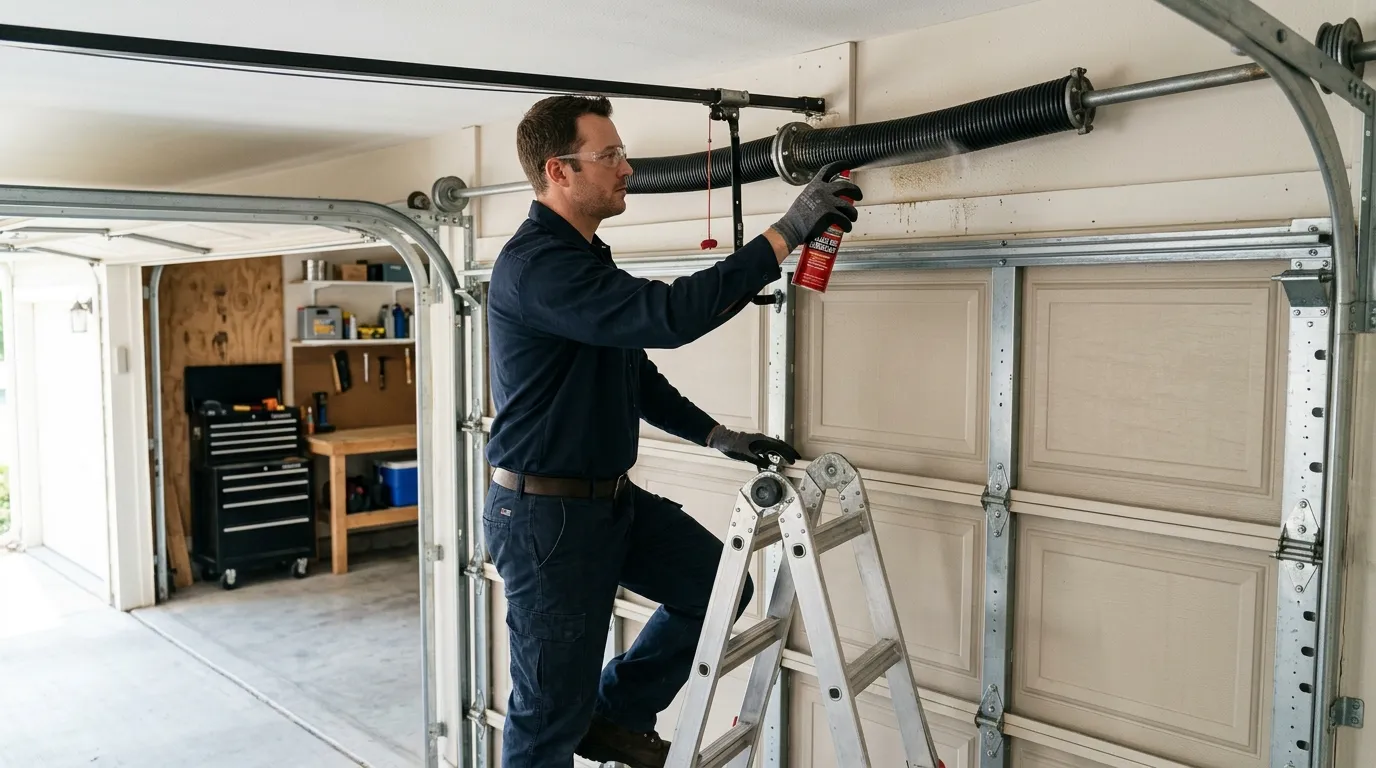
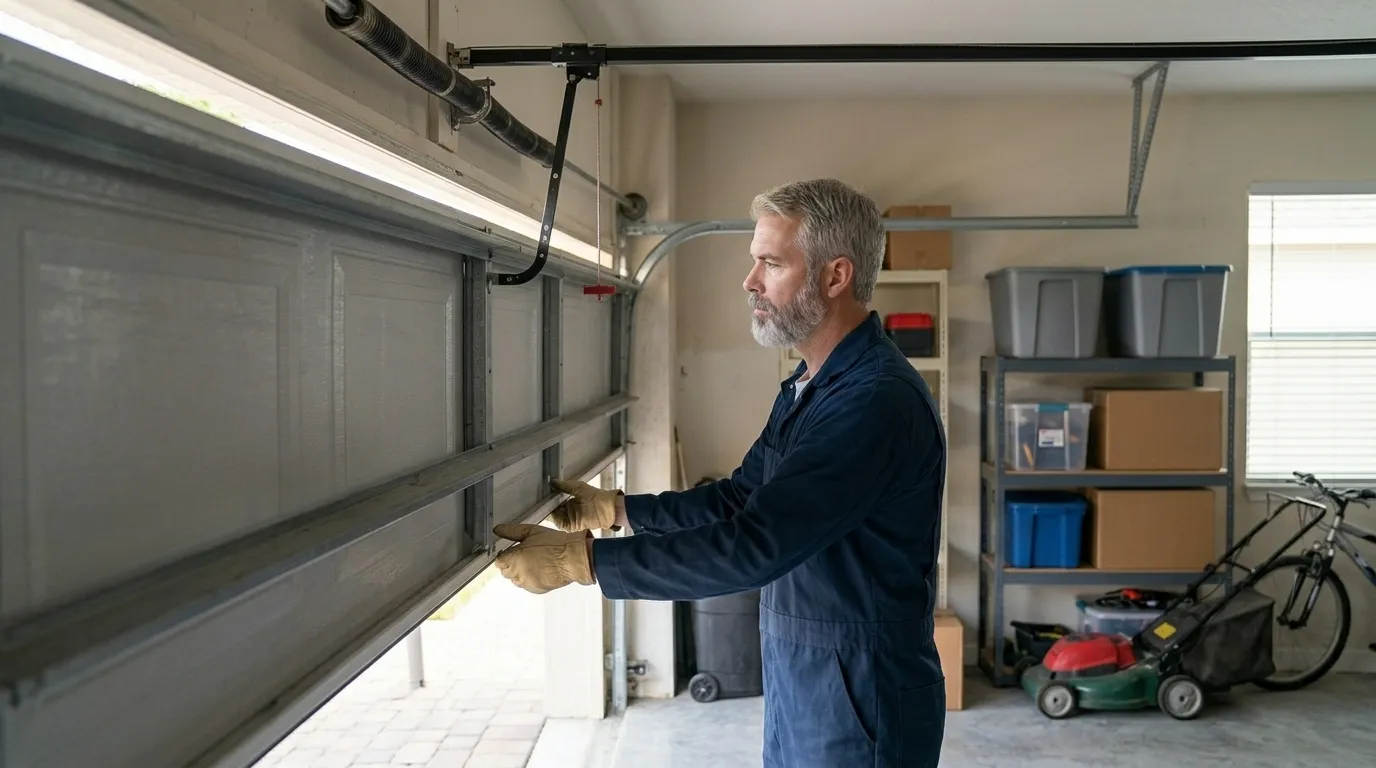
The most common version is simple: the door won't open, or it opens a few inches and the opener strains and stops. If you look up at the springs above the door and see a gap in the coil, that spring is broken and the opener is trying to lift the full weight of the door by itself, which is hard on the motor and the drive gear both.
A second pattern shows up before the full break. The door feels heavier than it used to when you lift it by hand with the opener disconnected, or it drops the last foot instead of settling. That's a spring losing tension gradually rather than snapping clean, and it's common on doors from the 1980s and 90s stock where the spring has been stretched past its rated cycle count for years without failing outright.
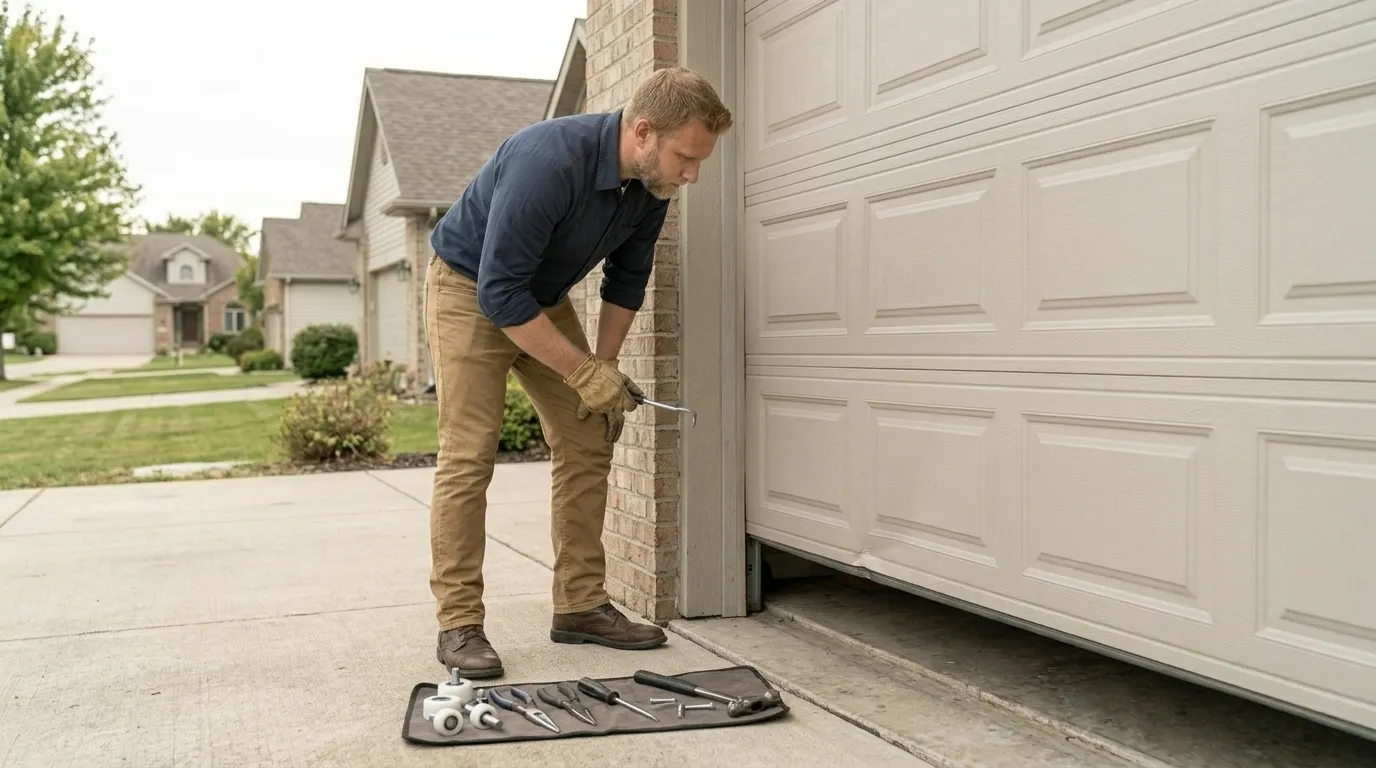
Worn rollers show up differently, usually as a grinding or popping sound as the door travels, sometimes with the door hopping slightly in the track. That's a separate repair from a spring, though on an older door we often find both at once.