24/7 Emergency Service Open 7 days · 7am–8pm Serving Duncanville, TX & nearby
(469) 796-3191
Duncanville, TX

Openers, Power Cuts, and Duncanville's Older Housing Stock

How Duncanville's 1980s-90s housing stock and summer heat wear out garage door openers, what happens during a power cut, and when to stop troubleshooting and call.

Openers, Power Cuts, and Duncanville's Older Housing Stock

What You Pay

We're not going to throw a number at you here, because what an opener repair or swap costs depends on what's actually failing - a logic board, a drive gear, a sensor pair, or the whole unit - and we can't quote that without seeing it. What we can tell you is what drives the decision. Housing across Duncanville's fifteen named areas went up mostly in the 1980s and 90s, so a lot of openers still running are original or close to it, meaning parts for the motor or the circuit board may not be stocked anymore even if the chain drive itself still turns. That pushes some jobs from repair into replacement territory faster than owners expect. Household income in the service area runs a median of $97,039, and most owners we talk to would rather replace an opener once than pay for two repairs on a unit that's already past its expected working life. If your opener is from that same build era as the house, ask about replacement cost alongside repair cost before you commit to either.

One honest limit: we don't install openers we haven't inspected first. A phone quote on an opener swap without seeing the rail, the door weight, and the wiring isn't a real number, it's a guess.

The Problem

Two things go wrong here more than most people expect: the opener itself dies quietly over years, and the power goes out and takes the opener with it - at least until someone remembers the manual release cord. Across the 82,444 households in this service area, a power cut doesn't just mean lights off, it means every garage door with a standard opener is stuck shut or stuck open until power's back or someone pulls the red cord and lifts the door by hand. Most owners find out their opener has no battery backup exactly when they need one most, standing in the driveway trying to get the car out.

The quieter failure is age. With most of this area's housing built between 1973 and 2014 and a median build year of 1993, a large share of openers running today are decades into service - original motors, original logic boards, original travel limits. They don't fail all at once. They start skipping a beep, reversing on a closed door, or taking two tries to trigger the sensor. That's not random. It's a thirty-year-old motor and board doing exactly what thirty-year-old motors and boards do.

What Local Conditions Do

Duncanville sits in a moderate-heat climate band, and that heat does specific damage to opener components that cold climates don't see as much. Circuit boards inside the housing run hotter every summer, and repeated heat cycling is what kills capacitors and solder joints years before the motor itself gives out. Photo-eye safety sensors mounted low near the floor pick up heat shimmer and glare off the driveway on the hottest days, which is why openers on older sensor pairs sometimes refuse to close in the afternoon and work fine at night - it's not a wiring fault, it's the sensors reading light interference that a newer sensor pair handles better.

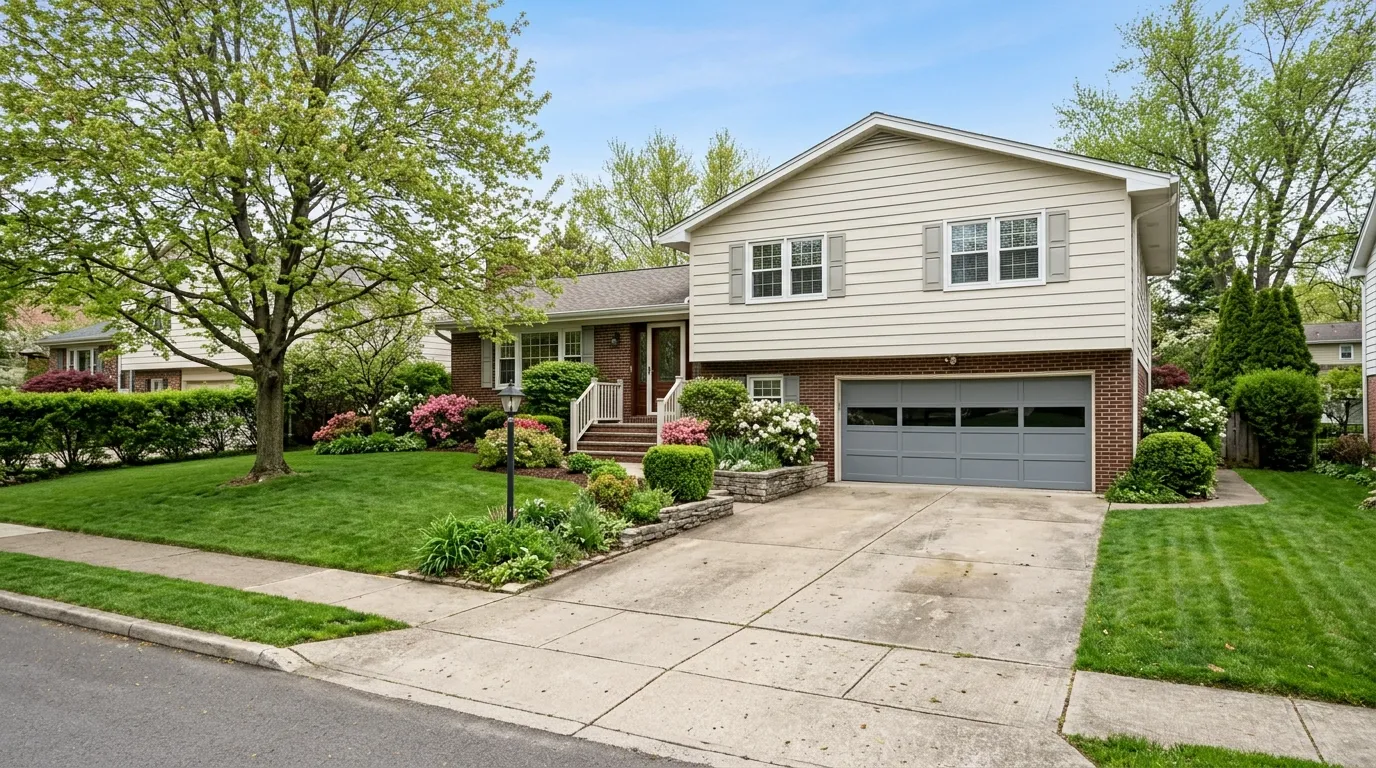
Because most homes across the fifteen named areas share that same 1980s-90s build window, this isn't a one-house problem - it's a pattern we see across blocks and subdivisions the same age. An opener installed the same year as the house next door is likely wearing out on a similar schedule, heat cycle for heat cycle. That's useful to know if your opener starts acting up: it may not be a sign something's specifically wrong with your unit, just a sign it's reached the point in its life where the heat finally catches up to it.
When It Stops Being a DIY Job

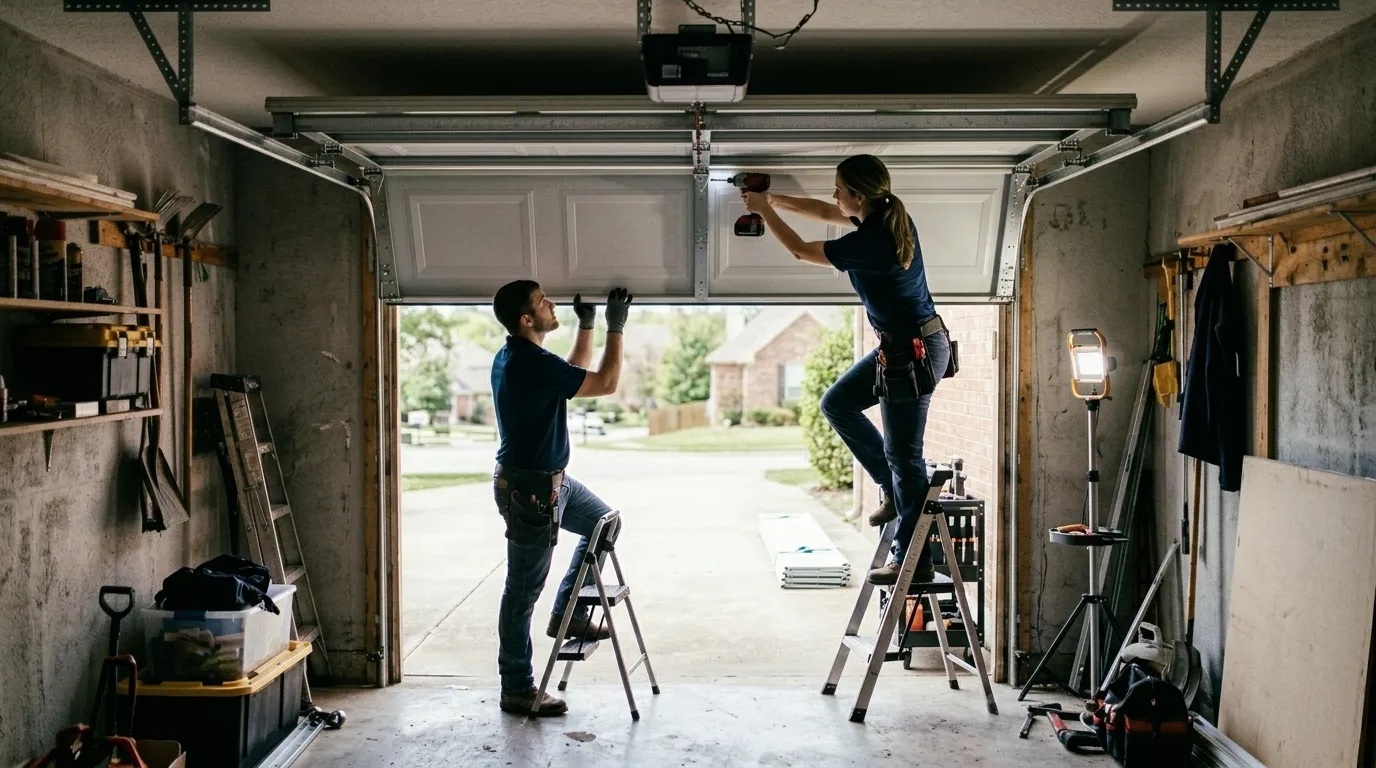
Pulling the manual release and lifting the door by hand during a power cut is fine, and it's what the cord is there for. Replacing a remote battery or reprogramming a keypad code is fine too. Where it stops being a DIY job is anything involving the motor housing, the logic board, or the travel limit settings on an opener from the 1990s build era - those units often use proprietary boards that aren't sold separately anymore, and opening the housing without knowing what you're looking at risks turning a repairable fault into a dead unit.

It's also not a DIY job once you're dealing with a door that won't respond to the opener at all during normal power - that's more often a wall switch, a wiring break, or a failed board than something a fresh battery fixes, and diagnosing which one it is means testing voltage at the unit, not guessing from the driveway. If your opener is original to a house built in that 1973-2014 window and it's throwing intermittent faults, that's the point to call rather than keep resetting breakers.

How it works

From “it’s stuck” to “it’s fixed”

A quick, honest process - no guesswork and no surprises.

  1. Tell us what’s wrong - Duncanville garage door service
    1

    Tell us what’s wrong

    Describe the symptom - won’t open, loud bang, opener runs but the door won’t move.

  2. On-site diagnosis - Duncanville garage door service
    2

    On-site diagnosis

    A technician tests the door under power and by hand and finds what actually failed.

  3. Clear, up-front plan - Duncanville garage door service
    3

    Clear, up-front plan

    You get the fix that’s needed and what drives the cost - before any work starts.

  4. Repaired & tested - Duncanville garage door service
    4

    Repaired & tested

    The repair is done, the door is set true and tested, and the work area left clean.

Serving Duncanville, TX - tell us what your door’s doing and we’ll take it from there.

How we work

What to expect

A straight, honest approach on every Duncanville job.

Diagnosis first

Every visit starts by finding what actually failed - not a pre-written parts list.

The right part for the door

Springs and openers matched to the door’s weight and age, so the fix holds up.

Straight answers

When a repair makes more sense than a replacement - or the reverse - you hear it plainly.

Clean, careful work

Tension released safely, hardware set true, the door tested under power before we leave.

Questions

Frequently asked

Straight answers about garage door repair in Duncanville. Still unsure? Ask us directly.

Why does my garage door opener only act up in the afternoon heat

Photo-eye safety sensors near the floor pick up sunlight glare and heat shimmer, which reads as an obstruction to older sensor pairs common in this area's 1980s-90s housing stock. It's not usually a wiring fault. Newer sensor pairs handle glare better, which is one reason we sometimes recommend a sensor swap instead of chasing a wiring problem that isn't there.

What do I do if the power goes out and my garage door is shut

Every standard opener has a manual release cord, usually a red handle hanging from the trolley on the rail. Pull it and you can lift the door by hand. It disconnects the opener from the door so you're just fighting the door's own spring, not the motor. Reconnect it by re-engaging the trolley once power's back.

My house was built in the 1990s - is my opener original

It's possible, and worth checking. A lot of Duncanville's housing across its named areas dates to that same 1980s-90s window, and original openers from that era are now well past typical service life. Look for a manufacture sticker inside the motor housing; if there isn't a battery backup feature, that's a strong sign it's original.

Ready to get your garage door sorted?

Tell us what it’s doing and where you are in Duncanville - we’ll take it from there.

Request a QuoteCall