Why springs in Duncanville homes built between 1973 and 2014 fail in a cold snap, what drives the cost, and when to stop and call a pro instead of DIY.
There's no flat number we can hand you here, because the cost of a spring job depends on what's actually hanging on your door - one torsion spring or two, the wire size, and whether the drum or bearing plate came along with the break. What we can tell you is what drives that number in this area. Most houses in Duncanville were built between 1973 and 2014, with the bulk of that stock going up in the 1980s and 90s. That means a lot of doors on original torsion hardware sized for the standard 7-foot double or single openings builders used in that era. If your spring is original to a house from that window, it's often not a like-for-like swap - the drum sizes and wind patterns some of those older setups used aren't always what's on the shelf today, so the tech may need to adjust the whole assembly, not just drop in a spring.
We won't quote a number over the phone before someone's looked at the door, and we're not going to pretend that's a bad thing - a wrong quote on a spring job usually means somebody either got overcharged or the tech under-bid a job that turns out to need a new drum or cable too. A short visit settles it.
The Problem
Torsion springs are wound steel, and wound steel doesn't like the cold. When the temperature drops, the metal contracts slightly and gets less forgiving under load - a spring that's been flexing fine for years can find its breaking point on the one morning it's 15 degrees colder than the day before. That's not a Duncanville-specific chemistry lesson, but the age of the spring matters a lot, and that's where the local housing stock comes in.
With median construction here landing around 1993, a large share of garage doors in town are carrying springs that are either original or a first replacement - meaning many of them are pushing 25 to 45 years of wind, heat, and use before that cold morning ever shows up. A spring that old has already lost some of its temper from two or three decades of Texas summer heat cycling it soft and winter cold snaps cycling it brittle. The cold doesn't cause the failure so much as it's the final push on a spring that was already worn thin. That's why the calls cluster the way they do after a cold front - not because cold breaks good springs, but because it finds the ones that were already close to done.
What Local Conditions Do
Duncanville sits in a climate band we'd call moderate heat - long stretches of real summer heat, winters that are mild more often than not, with occasional hard cold pushing through. That combination is actually rougher on spring steel than a place that's just cold all winter, because the metal never settles into one condition. It expands and softens through the hot months, then contracts and stiffens on the cold nights, over and over, year after year.
Over the 20 to 45 years a lot of these springs have been in service given the 1973-2014 build range of the housing here, that repeated swing works exactly like bending a paperclip back and forth - eventually it snaps, and it usually picks the coldest morning of the stretch to do it, because that's when the steel is at its least flexible. We don't get long, sustained deep freezes here the way northern towns do, but we get enough sharp swings across a typical winter that a spring already near the end of its life doesn't need much of a cold push to finally let go.
When It Stops Being a DIY Job
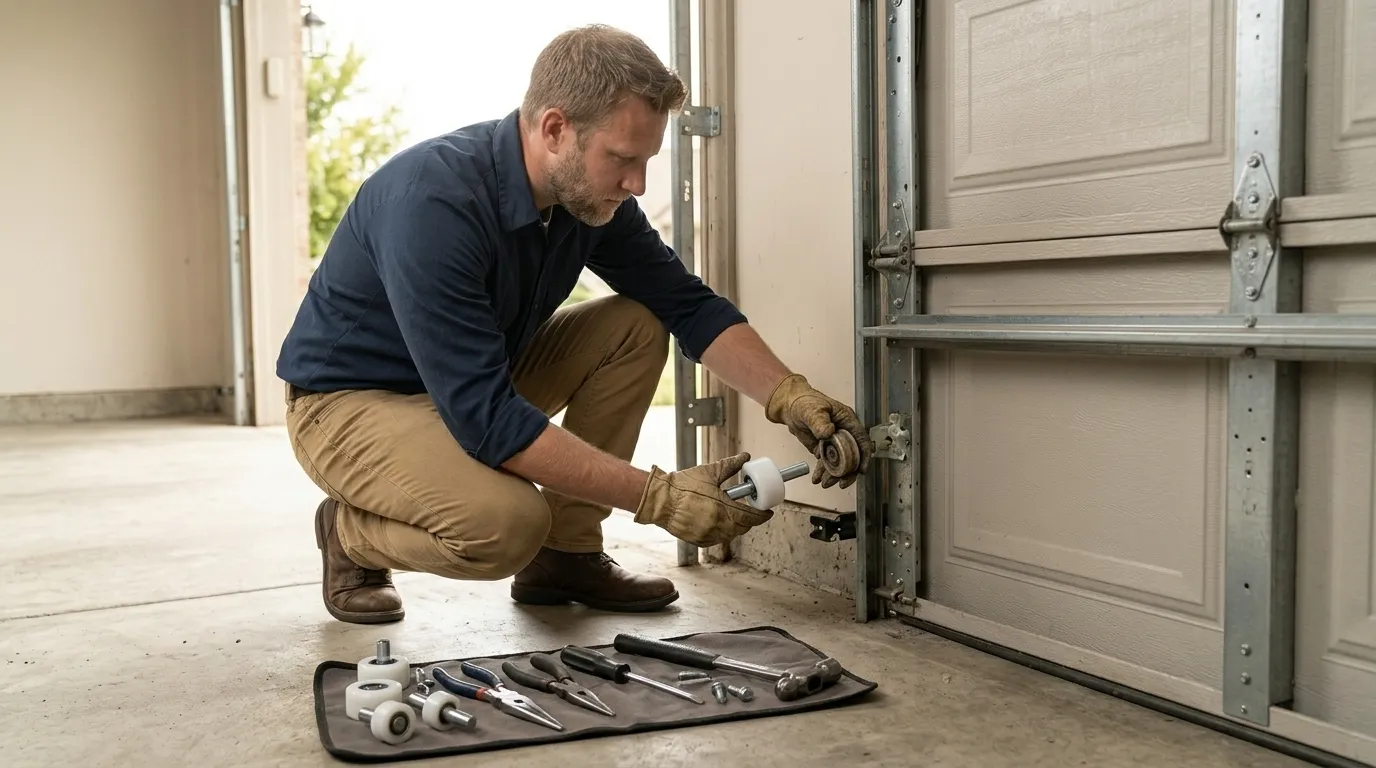
A broken torsion spring is not a bracket-and-screwdriver repair, full stop. The spring is wound under enough tension to snap a socket wrench out of your hand or worse, and on the older torsion setups still common on houses from the 1980s and 90s stock in this area, the winding cones and drums aren't always labeled the way newer hardware is - guessing wrong on turns or bar placement is how people end up in the ER, not just how they end up with a door that still doesn't open.
If the door won't open at all, if one side is hanging lower than the other, or if you can see a gap in the coil where the spring used to be a solid wound cylinder, stop there. That's the line. We'll also say plainly: if the opener, springs, and hardware are all original from a build in the early part of that 1973-2014 range, a repair sometimes isn't the better spend - replacing the whole assembly can make more sense than patching forty-year-old parts one at a time. A tech can tell you which side of that line your door is on in a few minutes; guessing at it yourself with a cold spring under load is the one place we'd tell you not to save the trip fee.
How it works
From “it’s stuck” to “it’s fixed”
A quick, honest process - no guesswork and no surprises.
1
Tell us what’s wrong
Describe the symptom - won’t open, loud bang, opener runs but the door won’t move.
2
On-site diagnosis
A technician tests the door under power and by hand and finds what actually failed.
3
Clear, up-front plan
You get the fix that’s needed and what drives the cost - before any work starts.
4
Repaired & tested
The repair is done, the door is set true and tested, and the work area left clean.
Serving Duncanville, TX - tell us what your door’s doing and we’ll take it from there.
Why did my spring break on the coldest morning of the year?
Cold steel is stiffer and less forgiving, so it's often the final push on a spring that was already fatigued. Given that most houses here were built between 1973 and 2014, a lot of springs are 25 to 45 years old and have already cycled through decades of summer heat and winter cold before that morning arrives.
Can I just replace the spring myself?
We wouldn't recommend it. A torsion spring is wound under heavy tension, and on the older hardware common to the 1980s and 90s housing stock in this area, winding cones and drums aren't always labeled clearly. A wrong turn count or bar placement can cause serious injury, not just a bad repair.
How much will a spring repair cost?
It depends on the spring size, whether it's one or two springs, and whether the drum or bearing plate is damaged too. We don't quote a firm number sight-unseen, since older torsion setups sometimes need more than a simple swap to match current hardware.
Is it ever better to replace the whole door instead of just the spring?
Sometimes. If the opener, spring, and hardware are all original to a house from the early part of the 1973-2014 build range, patching forty-year-old parts one at a time can cost more over time than replacing the assembly. A short in-person look will tell you which side of that line you're on.
Ready to get your garage door sorted?
Tell us what it’s doing and where you are in Duncanville - we’ll take it from there.