The Symptom
The door drops crooked, one side lower than the other, or it stalls a few inches up and won't go further. Sometimes you hear a snap and the door just sits there, refusing to open or close under its own power. If a cable has come off the drum but hasn't broken, the door may still limp along until it jams hard, usually at the worst possible time.
With the older stock common in this part of Highland Park, we also see cables that have simply stretched and gone slack over decades of use, rather than snapping outright. That shows up as a door that closes unevenly or drifts open a few inches overnight because the cable no longer holds full tension. It's a quieter failure than a snapped cable, but it's just as much a safety issue since the door isn't actually locked in position.
Parts We Carry
We stock standard galvanized lifting cables in the diameters and lengths that cover most residential doors, along with the bottom brackets, drum sets, and end fittings that commonly wear alongside a cable. For homes on the older end of the area's range, closer to that 1973 median, we also carry parts sized for older drum and track combinations that newer trucks sometimes don't bother stocking anymore.
What we don't stock on the truck is anything custom, oversized commercial cable, or specialty coated cable for unusual door weights. Those get special-ordered, and that's the honest limitation here: if your door needs something outside standard residential sizing, the fix isn't same-visit. We'll tell you that on-site rather than take a guess and have it fail again in six months.
The Complications
Cable jobs get complicated fast when the spring is also compromised. A broken cable sometimes takes the tension off a spring unevenly, and if that spring was already near the end of its life, you're now looking at a spring-and-cable job instead of a cable-only job. We check spring condition every time we're under a door for a cable repair, because sending a customer off with a fresh cable on a dying spring just means a second call.
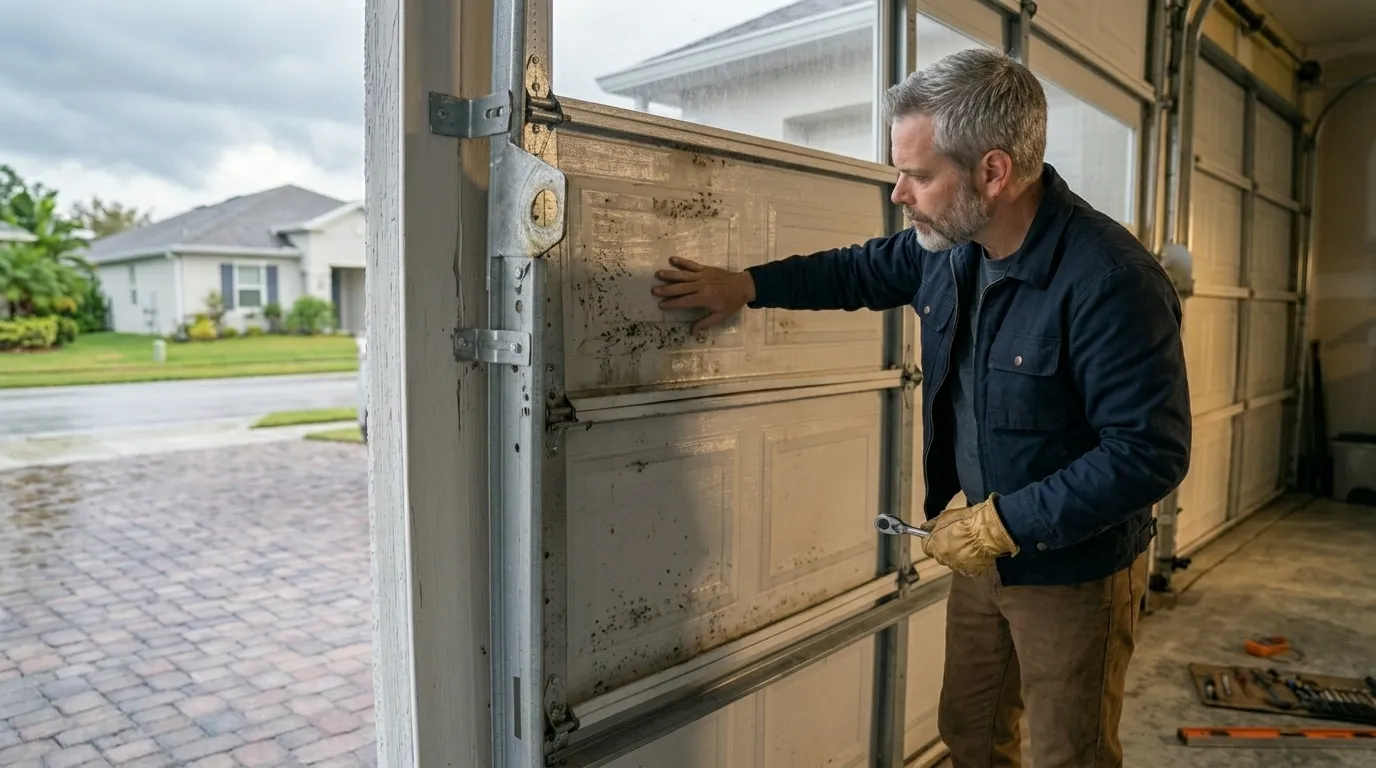
Rust is the other complication, and it shows up more on older hardware. A drum or bracket that's corroded at the mounting point may not hold a new cable properly even if the cable itself is fine. On the 1973-era stock common here, that's worth checking before we call the job finished, not after.
What Causes It Around Here
Cable failure is mostly a wear-and-cycle problem, not a weather problem, in this part of Texas. The service area sits in a moderate heat climate band, which is easier on cable coating than the extreme swings some regions see, so we're usually looking at age and use rather than climate damage.
With Highland Park's housing running older than the 1993 median across the broader area, more of the doors here are simply further along in their cable's working life. A cable rated for a certain number of open-close cycles doesn't care how old the house is around it, and homes built in the early 1970s have had more decades of cycles running through the same hardware, or through a single mid-life replacement, than the newer stock common elsewhere in the service area.