What Causes It Around Here
Housing in this service area went up mostly between 1973 and 2014, with the median build year around 1993 and the bulk of the stock dating to the 1980s and 90s across the 15 named areas we cover. That matters for one plain reason: torsion springs are rated for a number of open-close cycles, not years, and a spring installed when a house was built in the late 80s or early 90s has usually put in three decades of daily lifts by now. That's well past the point where steel fatigue takes over from wear.
The climate band here is moderate heat, not the extreme swings some regions deal with, but summer heat still does its work on this door hardware. Steel springs expand slightly as they heat, lubricant on tracks and rollers thins out and runs off in July and August, and nylon rollers on 90s-era doors get brittle faster than newer composite ones. None of that is dramatic on its own. What it means in practice is that a spring or roller that's been quietly weakening for years tends to finally let go on the hottest afternoon of the week, which is exactly when a driver needs the door open to get out. That combination - older original hardware plus steady summer heat load - is why the failures we're called out for here skew toward springs, rollers, and cables rather than openers alone.
The Symptom
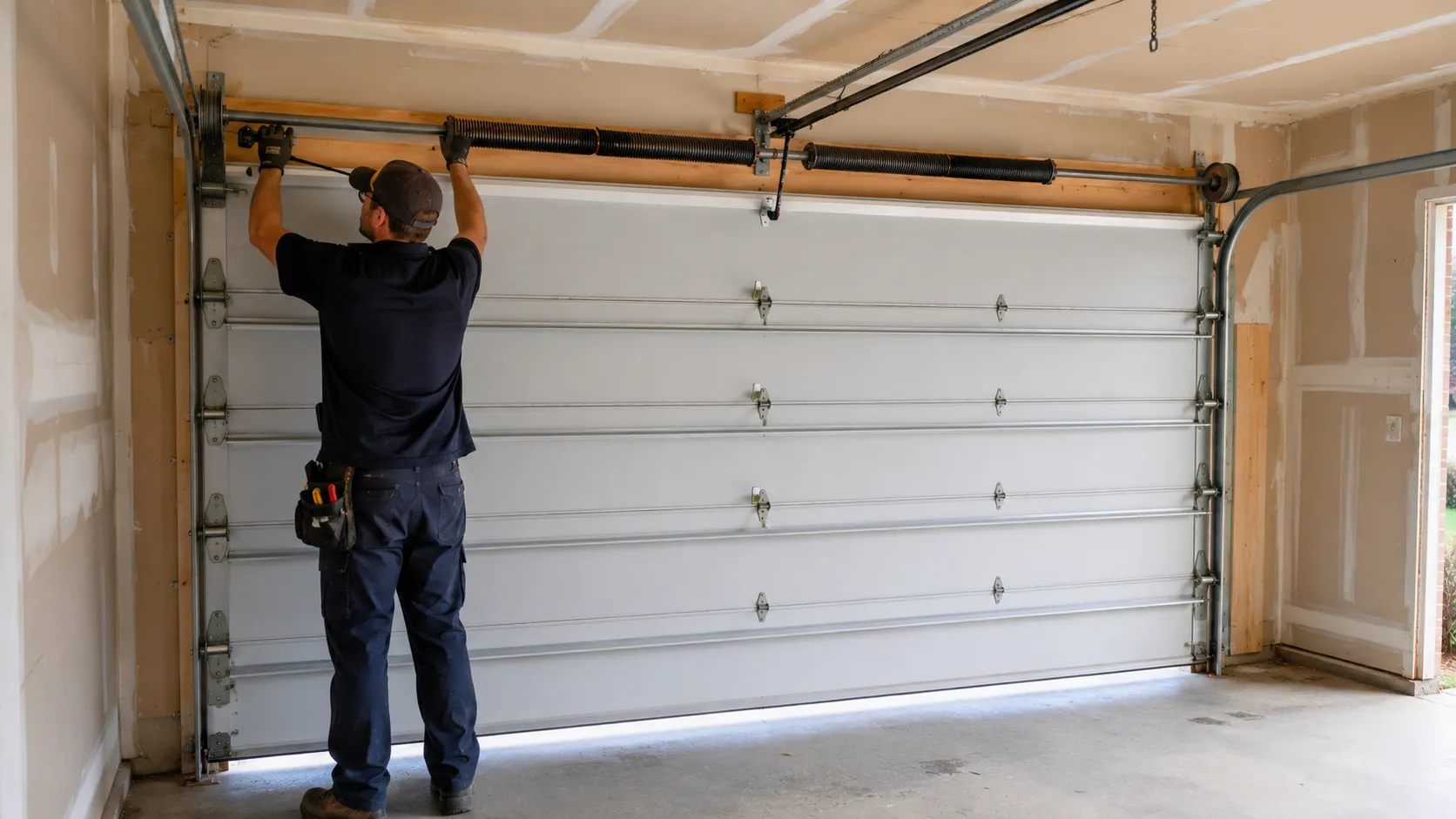
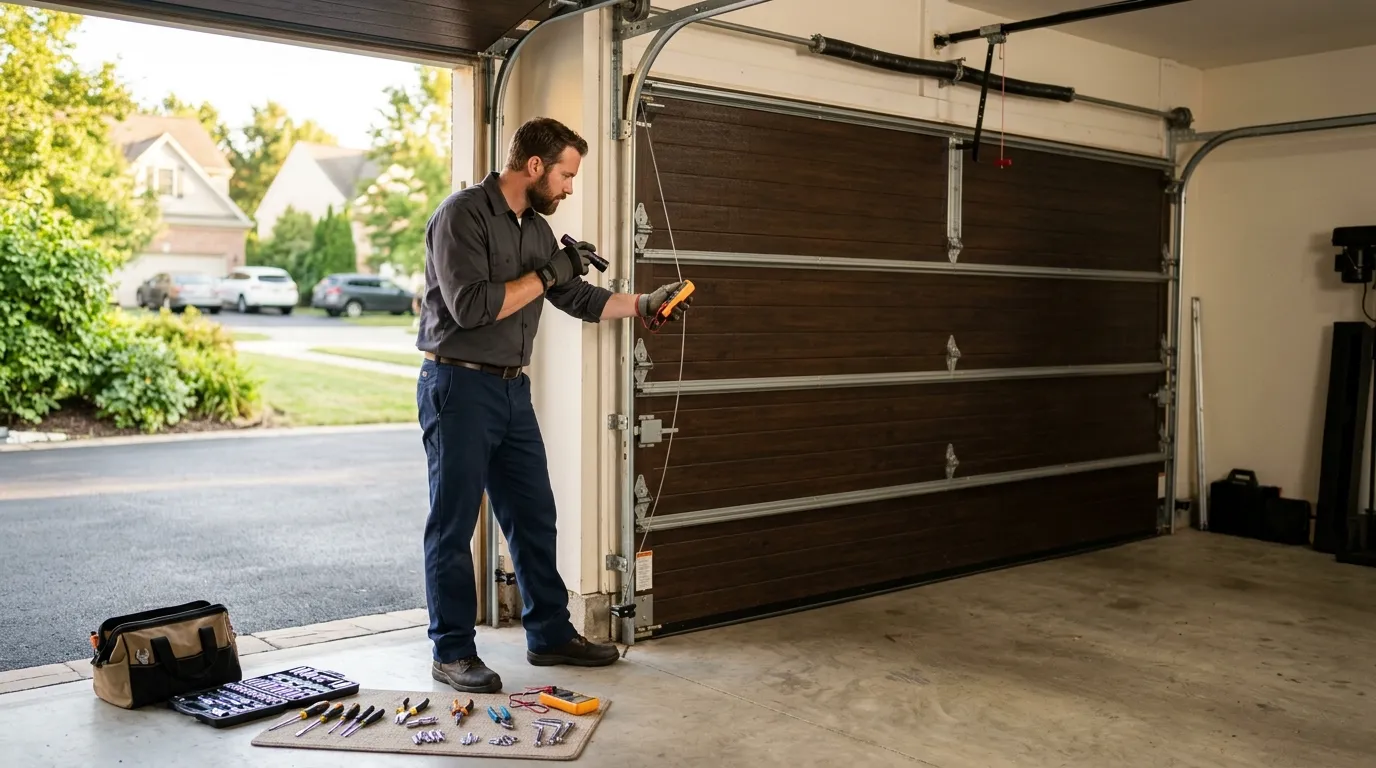
The classic emergency call is a door that won't open at all, paired with a loud bang from the garage a few minutes or hours earlier. That bang is almost always a torsion spring snapping. After it happens, the opener will try to lift the door and either stall halfway or strain and reverse - the motor isn't built to lift a garage door's full weight alone, and it won't.
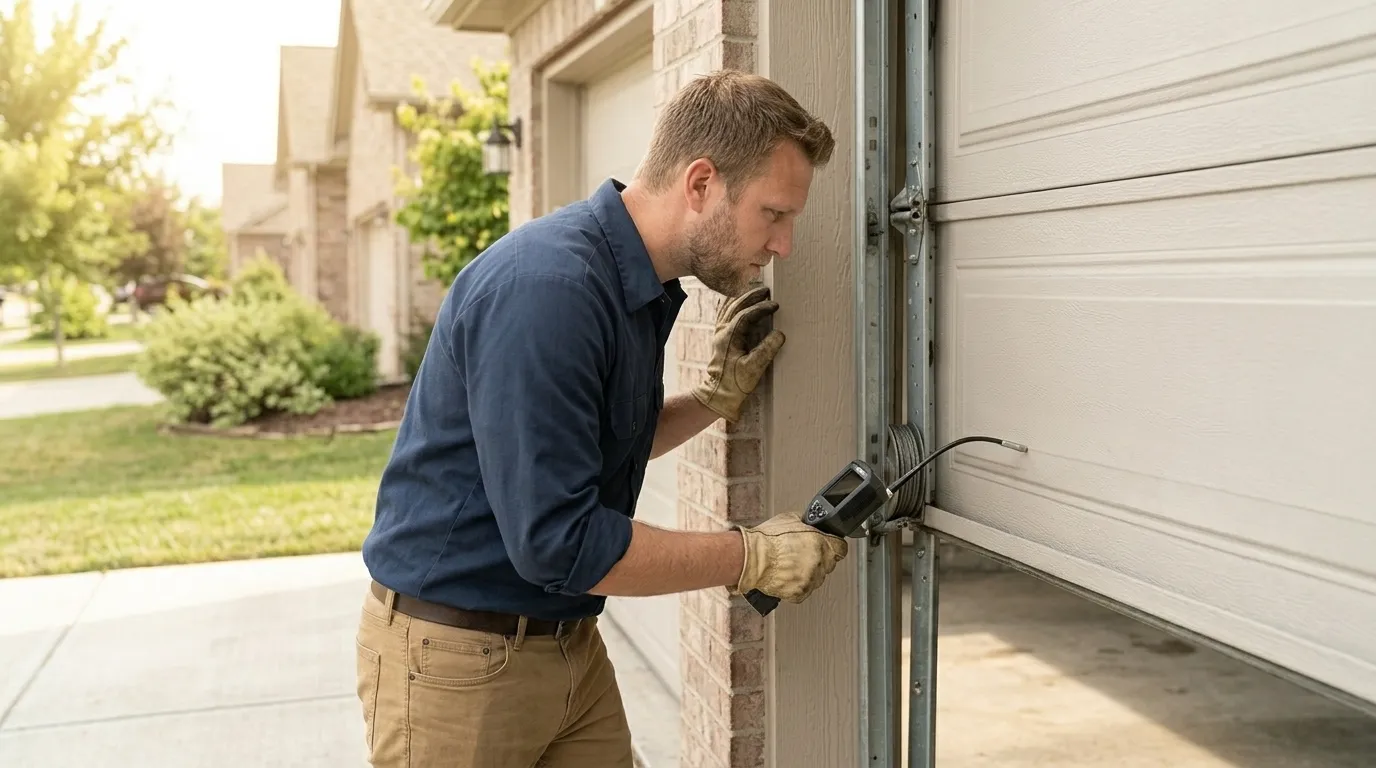
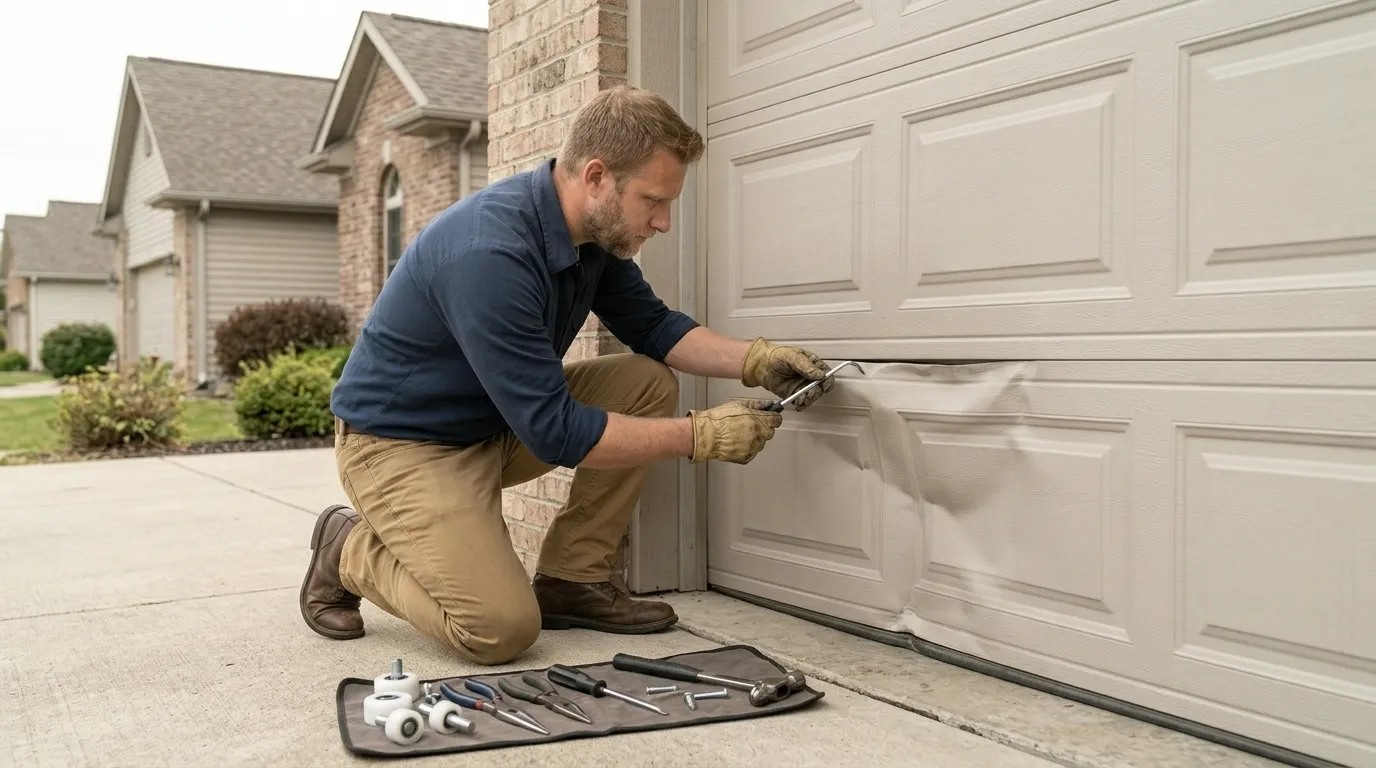
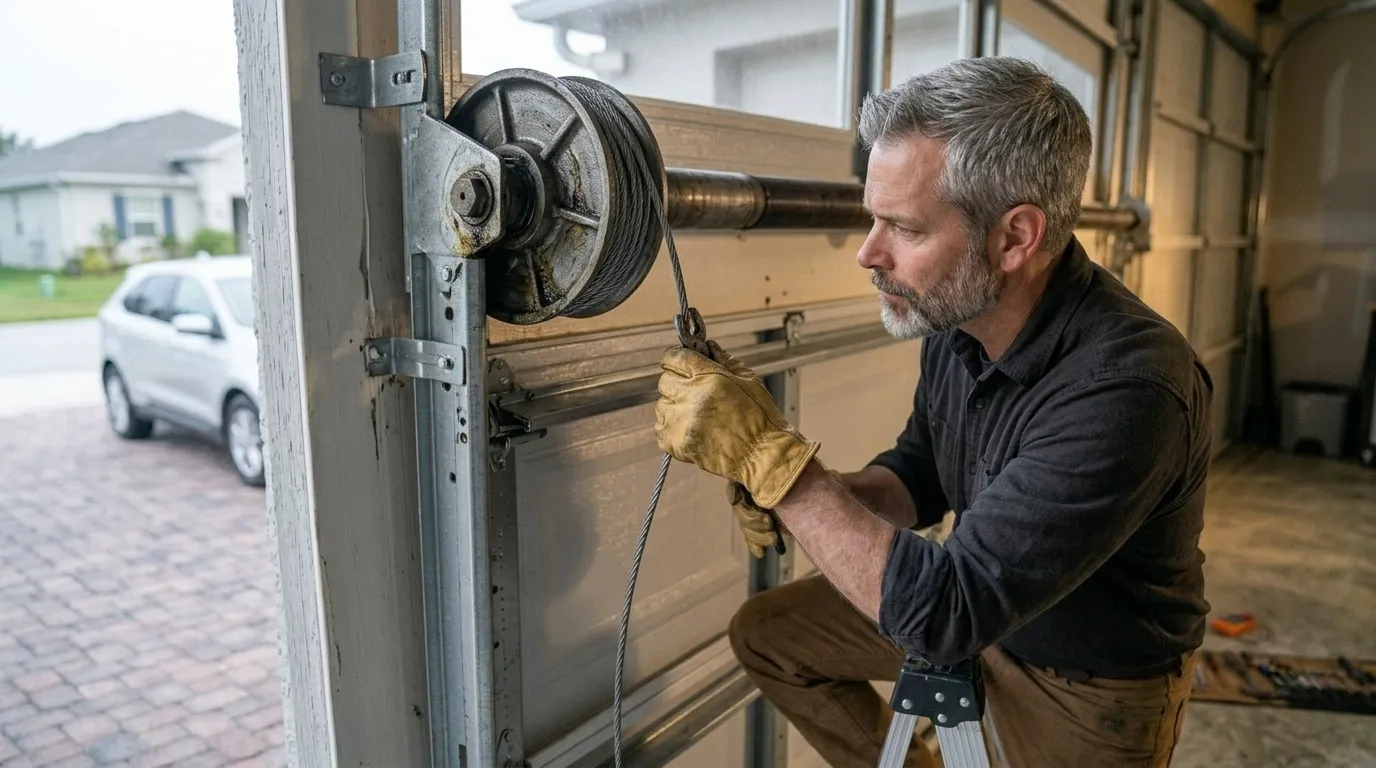
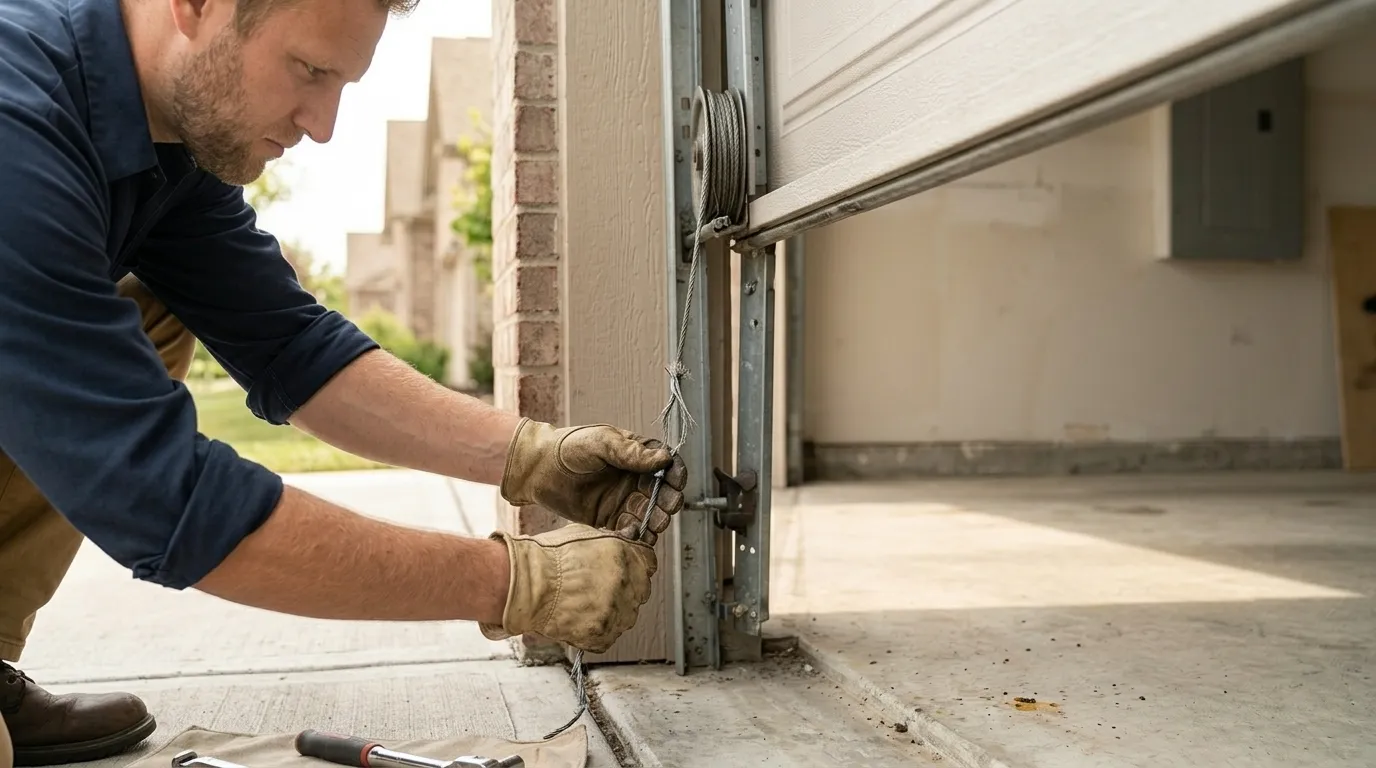
A second common pattern: the door opens but comes down crooked, dragging on one side, with a frayed or visibly broken cable on the low side. This is more common on doors original to houses built in the 80s and 90s stock we see across this area, where the cable has never been replaced.
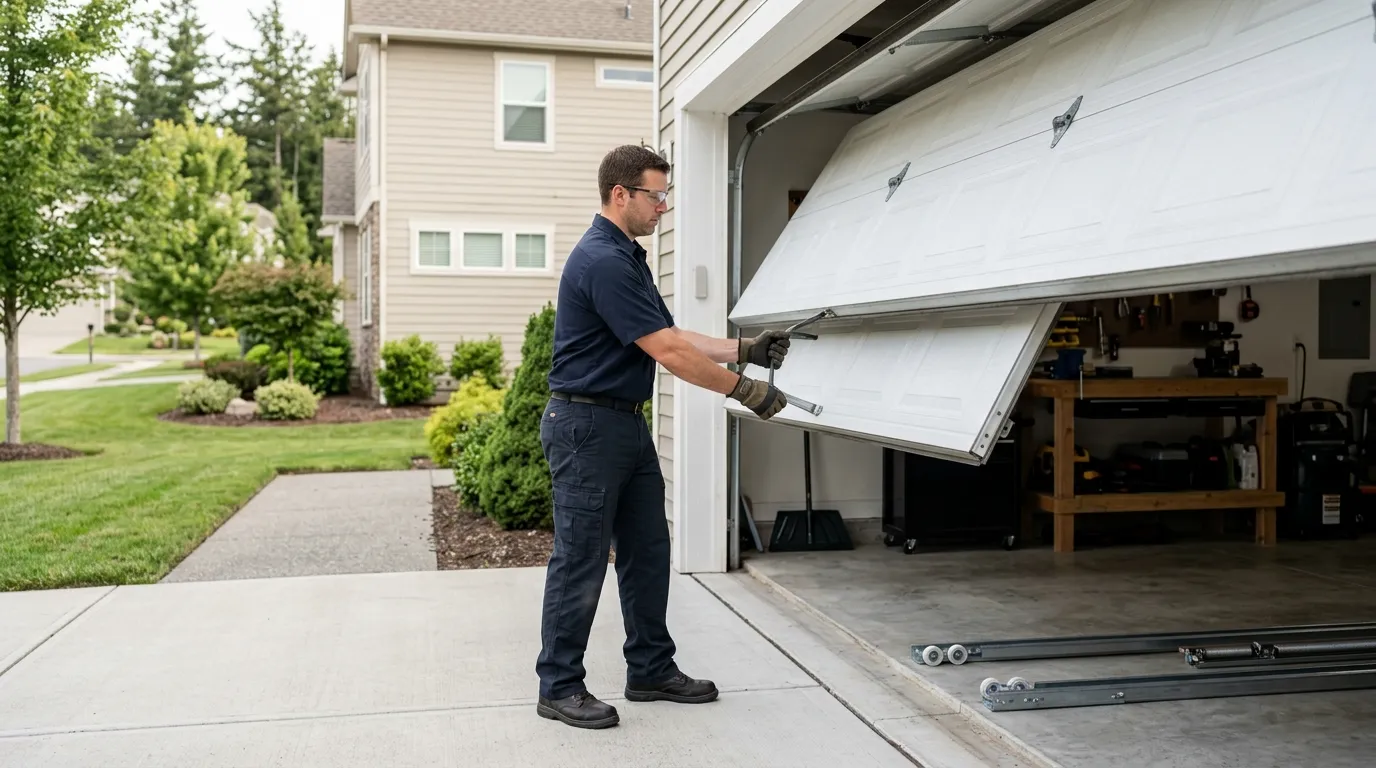
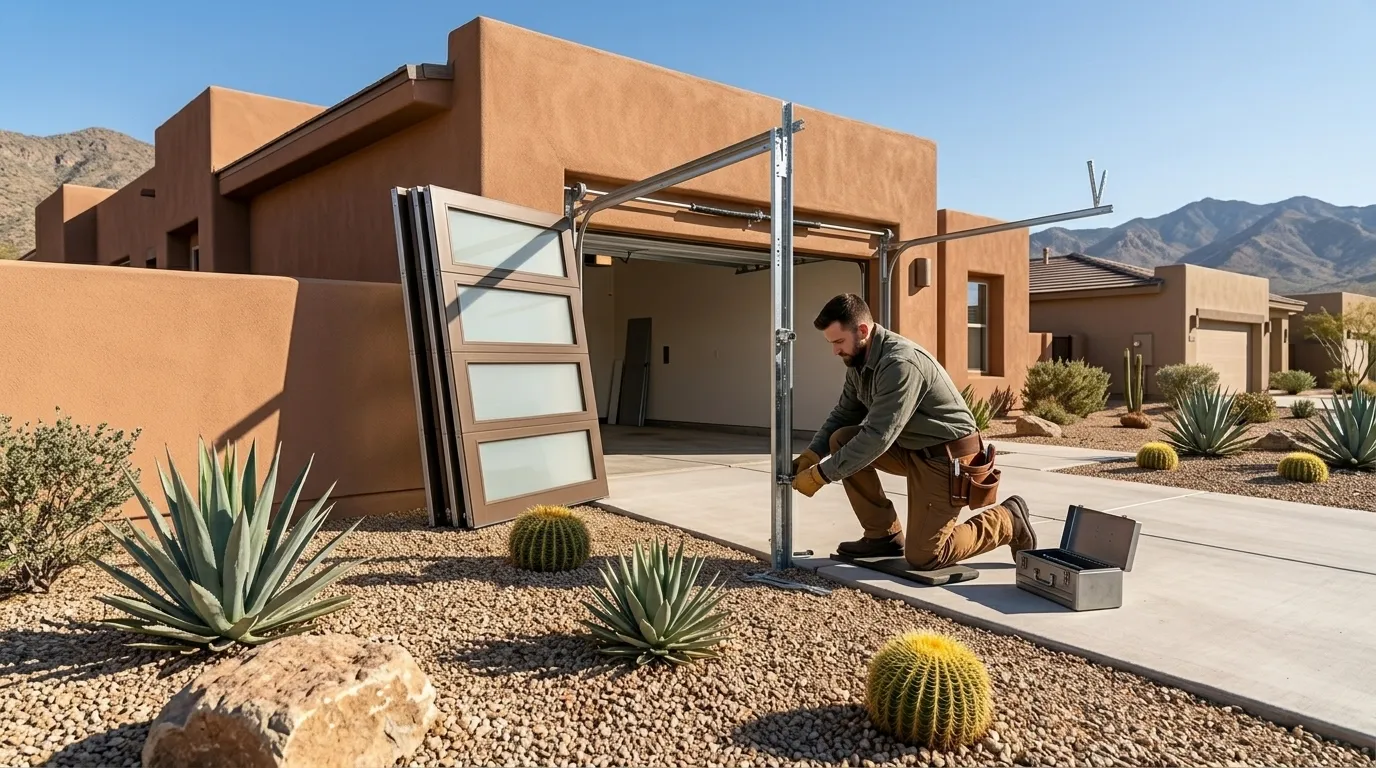
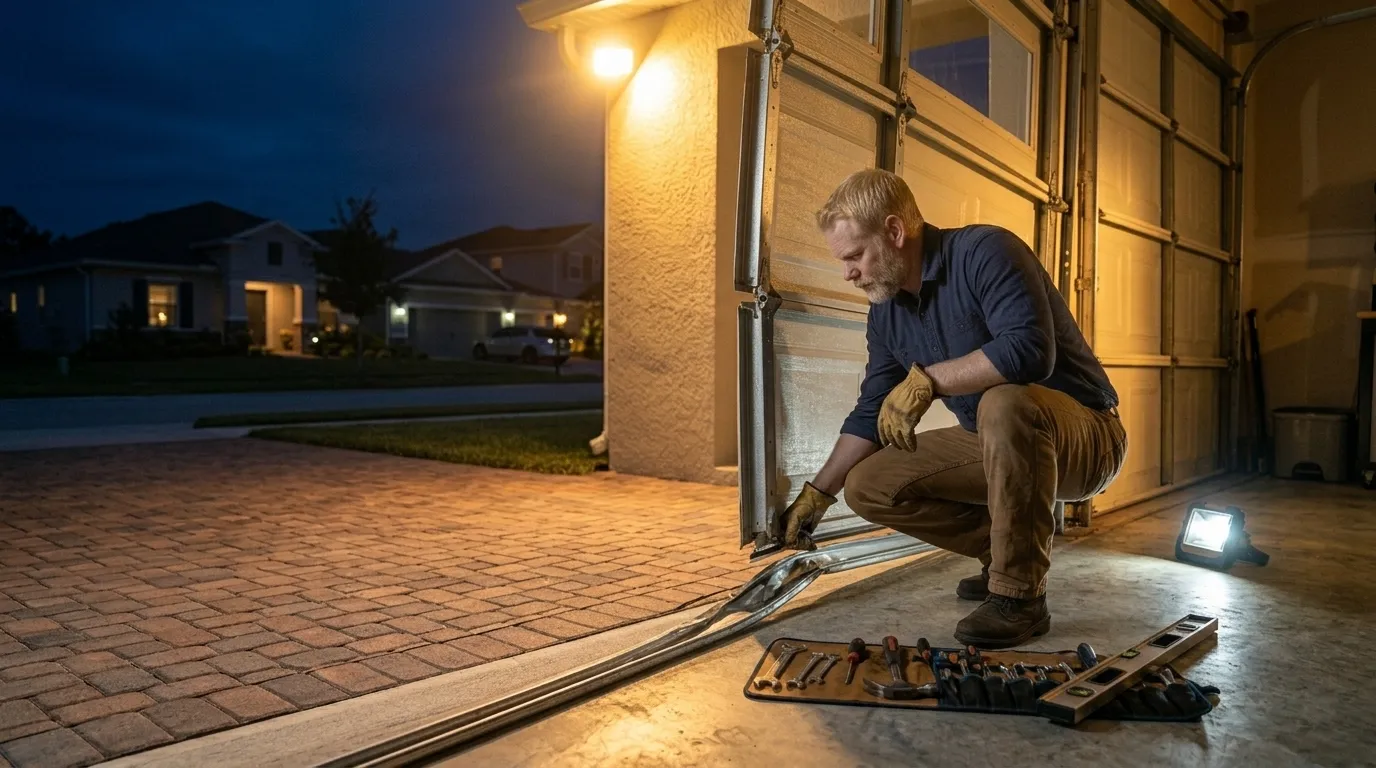
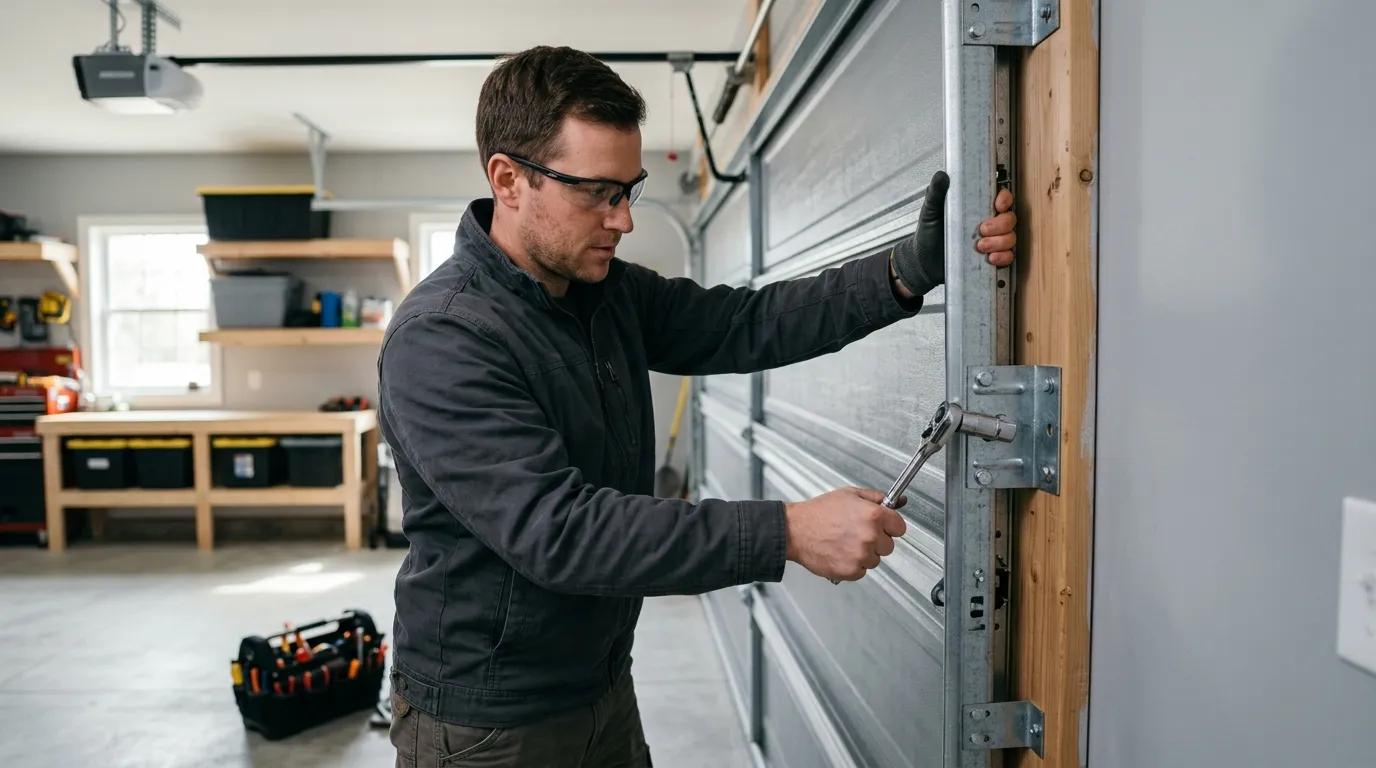
A third: the door is stuck shut, opener humming but nothing moving, and a roller has jumped the track - often on the older nylon rollers common on original doors from this build era. Each of these is a same-day emergency because a stuck-open or stuck-shut garage door is a security and safety problem, not a cosmetic one. None of them are safe to force past with the opener's remote.