How to Book
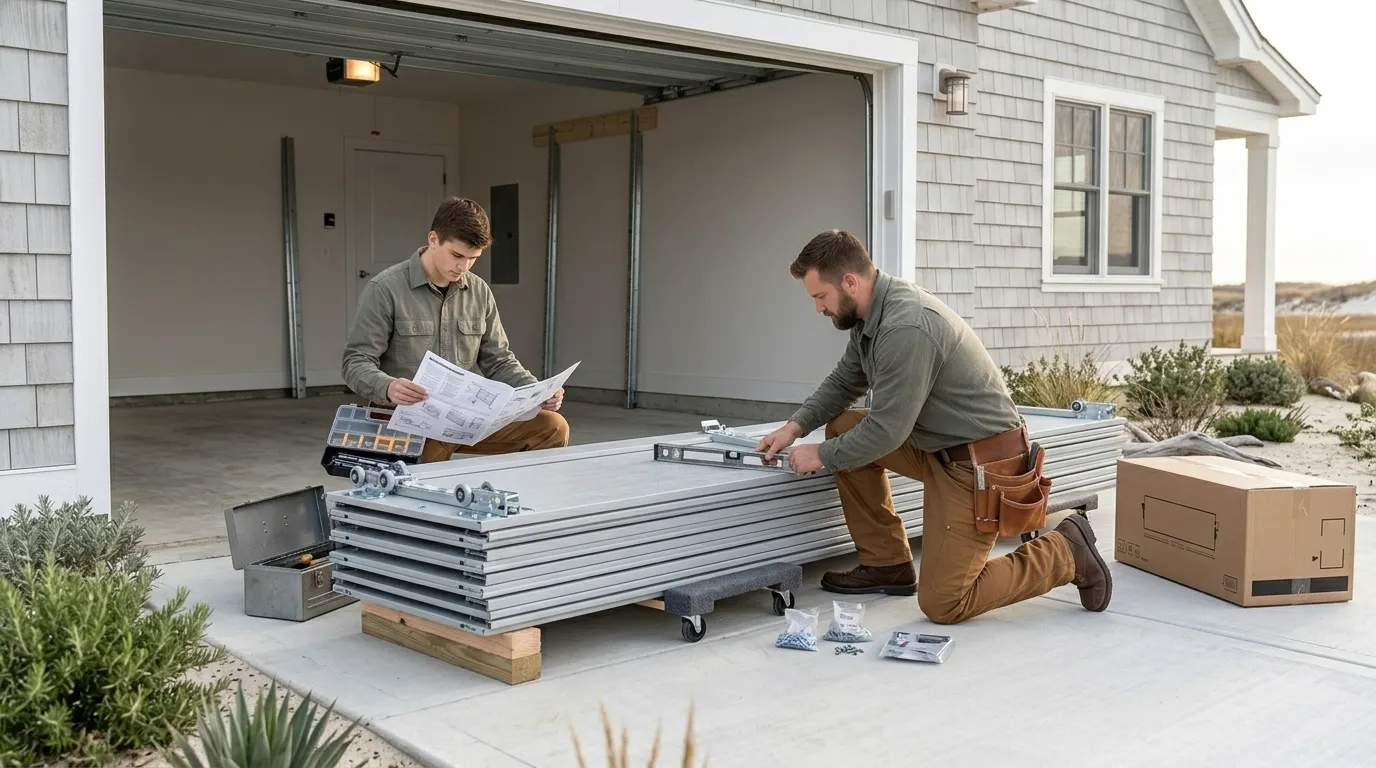
We run out of Duncanville, about 19 miles from Rendon, so booking here works a little differently than it would for a job five minutes from the shop. Tell us the age of the house if you know it, or at least whether the door still has the original opener, because that shapes what we load before we leave. We don't keep a branch or a drop box in Rendon, and we're not going to claim a response window we can't back up over that distance. What we can tell you is that the trip is routine for us, not an exception, and it factors into how we schedule the day rather than how we price the call. Check the coverage page for how Rendon fits into the route before you call. If you're weighing repair against a full replacement, mention that too, since it changes whether we bring one truck or plan for a return visit with a door on order.
The Complications
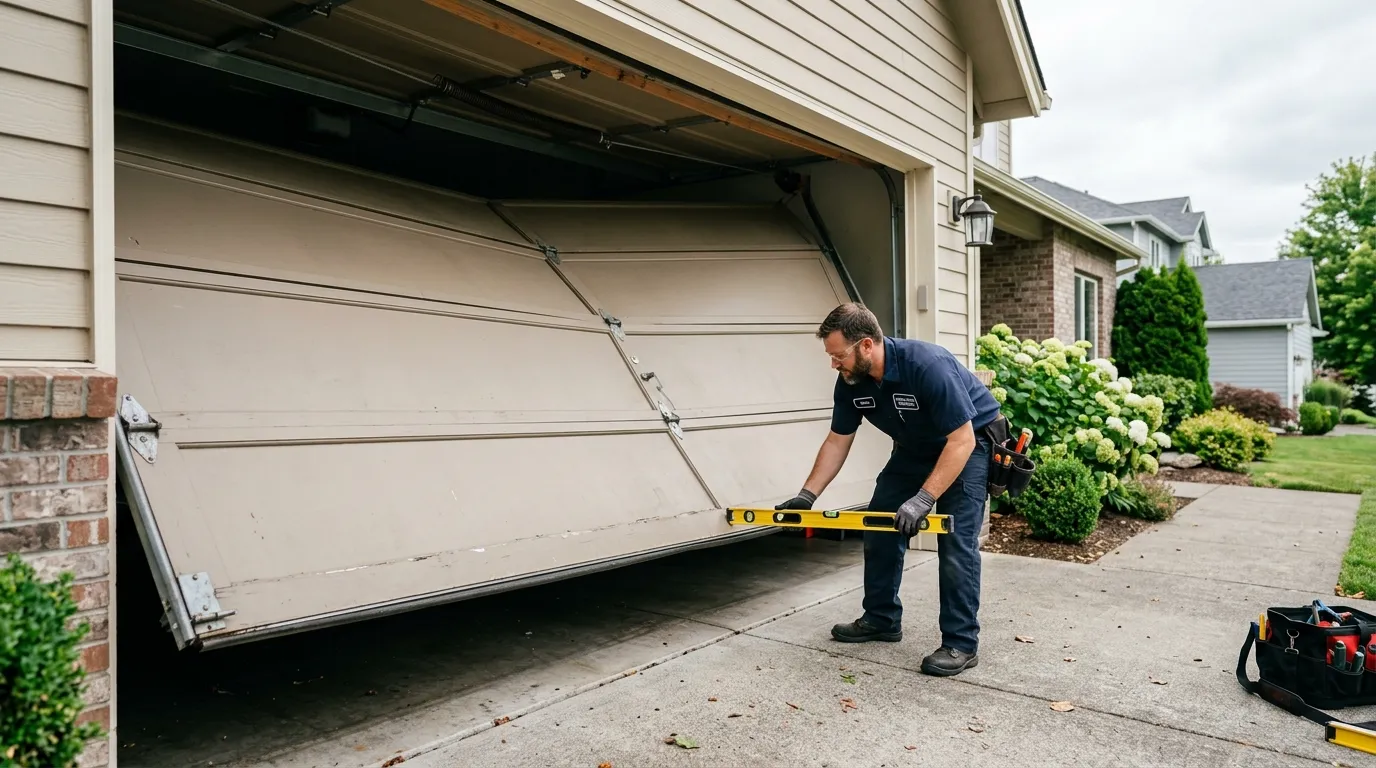
A household income median of $107,618 in this area means a fair number of these garages hold more than a car and a lawnmower, and doors here often get opened and closed several times a day rather than twice. That cycle count matters more than the calendar year once a spring is already twenty-plus years old. The build era, right around 1992, is also the point where a lot of tract construction still used single-layer steel doors, which sag and rack out of square in ways insulated doors from later builds don't. On the distance side, a 19-mile run from Duncanville means a job that turns out to need a part we didn't load, based on a phone description that didn't match what we found, costs more drive time than it would closer to the shop. We'd rather ask an extra question before the truck leaves than get out there and discover the door needs a full opener swap instead of a sensor. None of that is unique to any one house, but it's specific to how repair work plays out at this distance from the shop and at this housing age.
Doing It Yourself
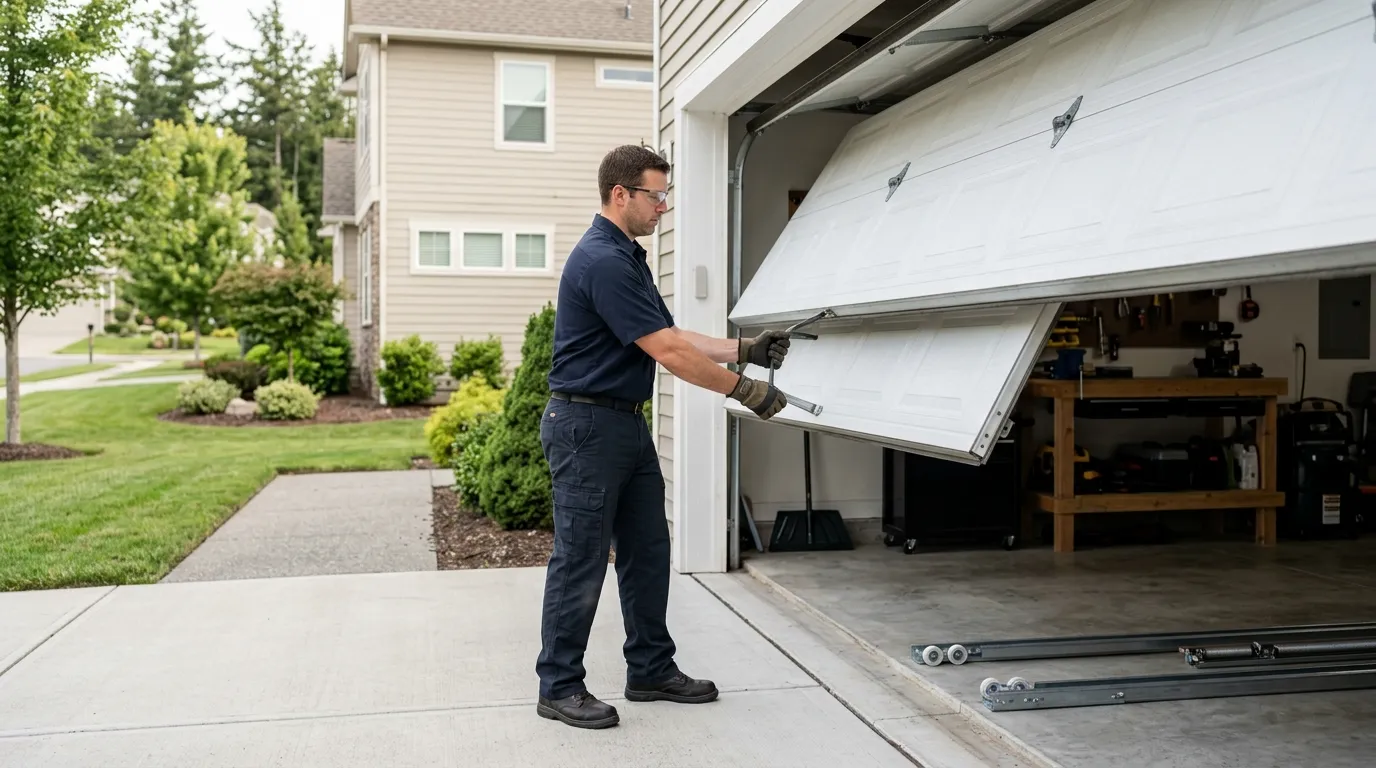
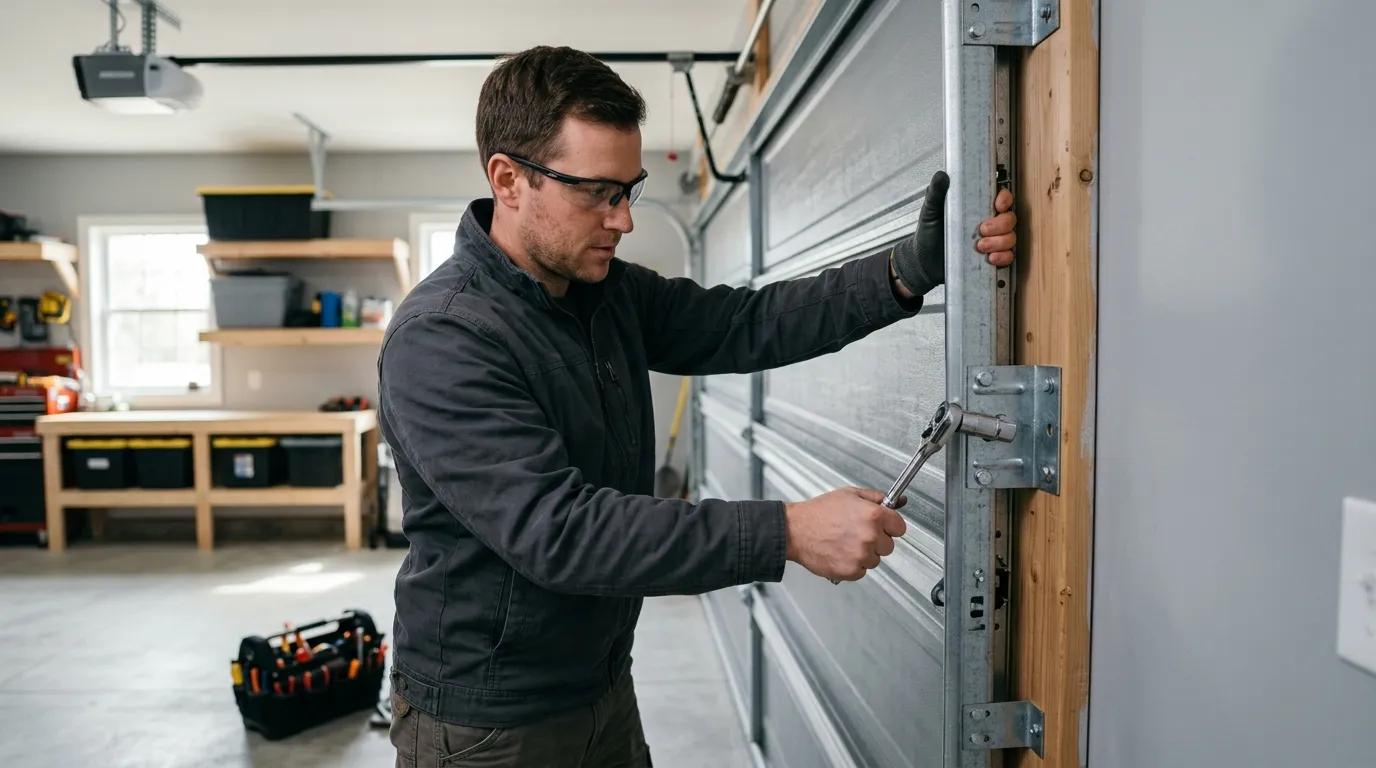
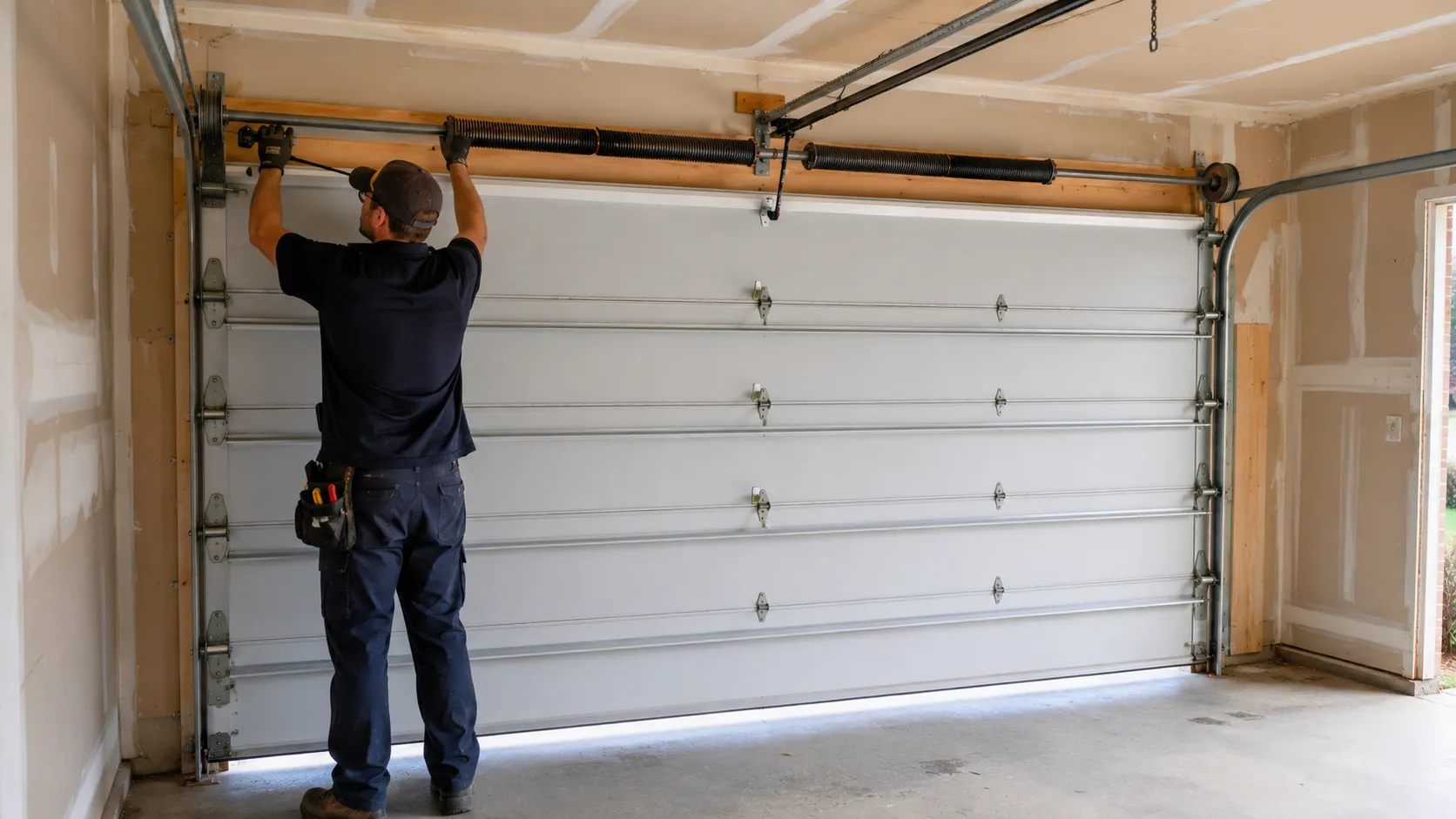
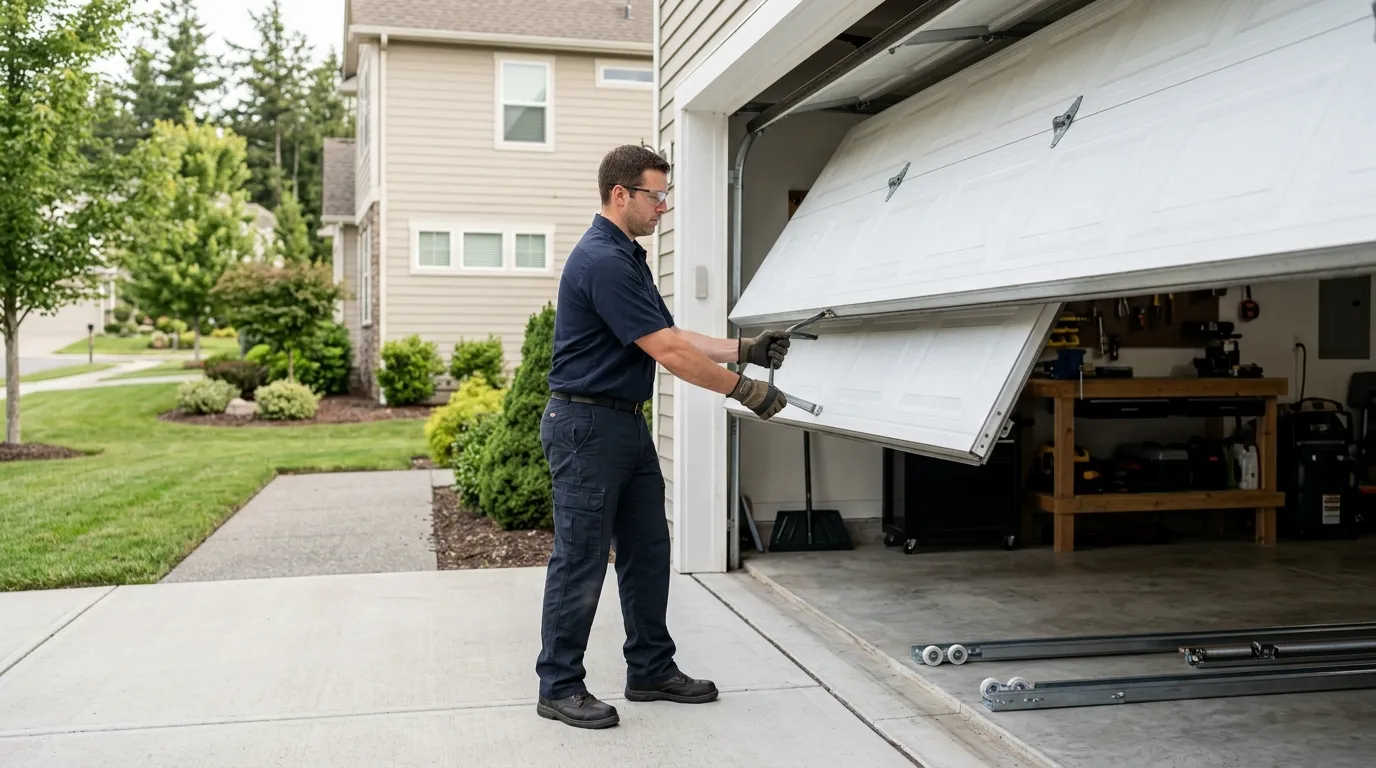
There's real DIY territory here and there's a line you shouldn't cross. Lubricating the tracks and rollers with a garage-door-specific lubricant, tightening the bolts on the roller brackets, and wiping down the photo-eye sensors so the door actually reverses when it should - all of that is fair game and worth doing twice a year given how often a busy household door gets used. What isn't DIY territory is the torsion spring itself. It's wound under enough tension to break a bone or worse if the winding bars slip, and that's true whether the house was built in 1992 or last year. We also won't pretend a stripped opener gear or a badly racked steel door is a weekend fix with parts from a hardware store; those jobs need the door taken off track and reset square, which is two-person work with the right clamps. If your door is original to a house built in the early 1990s and you're now on your second or third repair call for it, replacement is usually the better math than keeps patching a door that's outlived its spring, its rollers, and its opener at roughly the same time.