What You Pay
We don't quote a flat number here because an off-track repair on a double steel door isn't the same job as one on a single door, and we haven't set a fixed rate for either. What drives the cost is what's actually wrong: a roller that jumped one track section is a different job from a cable that snapped and let the whole door drop crooked, which is a different job from bent track that has to come off and get replaced.
Midlothian sits about 13 miles from our shop in Duncanville, and that drive is part of what goes into any quote we give you before we start work, not something we bury in the final invoice. We look at the door in person, tell you what's broken, what it costs to fix, and let you decide before any tool touches the track.
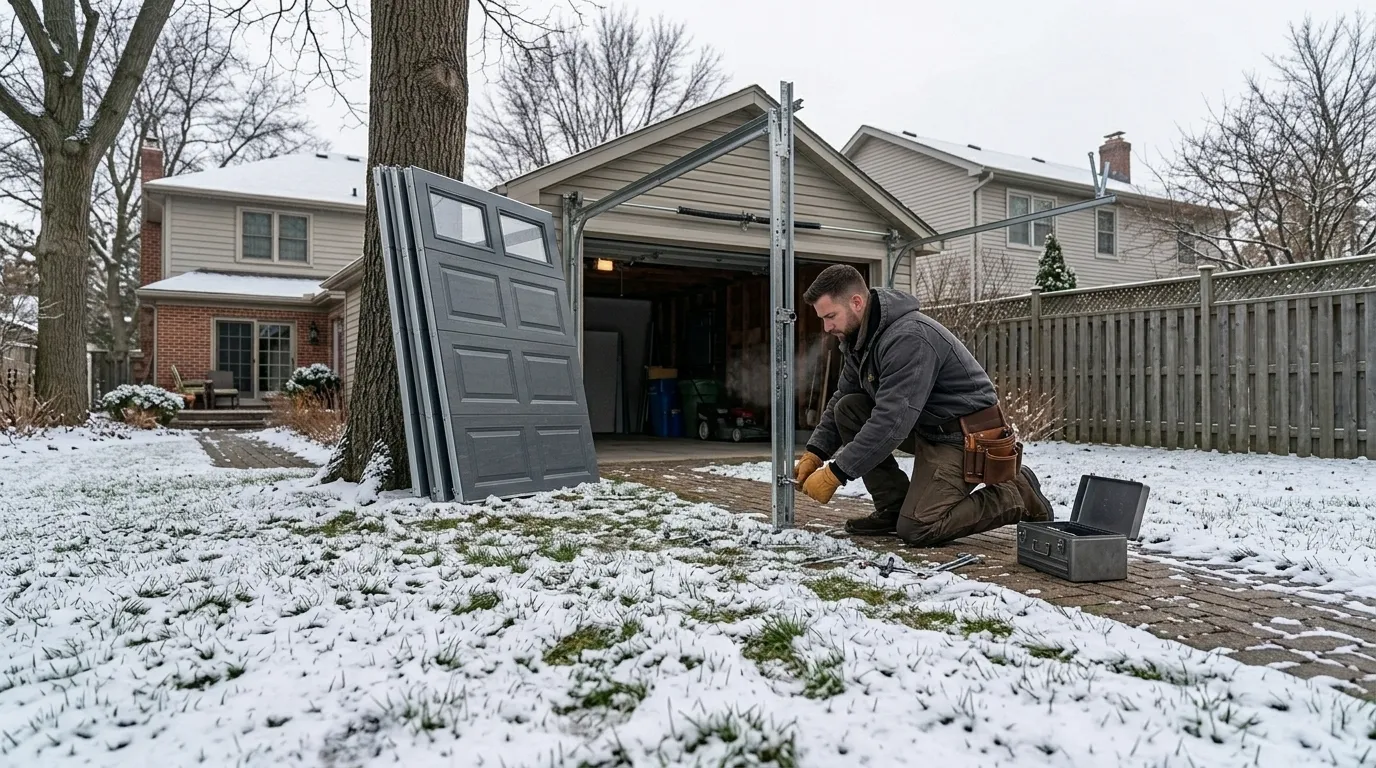
One honest note: if the track is bent badly enough on a door this size, sometimes the smarter money is a new track section rather than trying to straighten steel that's already stressed. We'll tell you when that's the case instead of billing you for a fix that won't hold.
How to Book
Tell us what the door is doing - stuck partway, hanging at an angle, one side dropped lower than the other - and whether it still moves at all or is jammed solid. That tells us whether it's a roller off one track or a cable failure, and it changes what we load on the truck before we make the drive out from Duncanville.
We don't have a branch in Midlothian, so every job here starts with that 13-mile trip. Give us a rough idea of the door's age if you know it - most homes in this part of town were built well after 2000, which usually means standard-lift torsion hardware, but we'd rather confirm than guess before we're on site.
If the door is hanging loose or one cable looks snapped, don't try to force it up or down by hand. A double steel door off one side of its track is heavy enough to come down fast, and that's a hospital trip, not a repair job.
What the Fix Involves
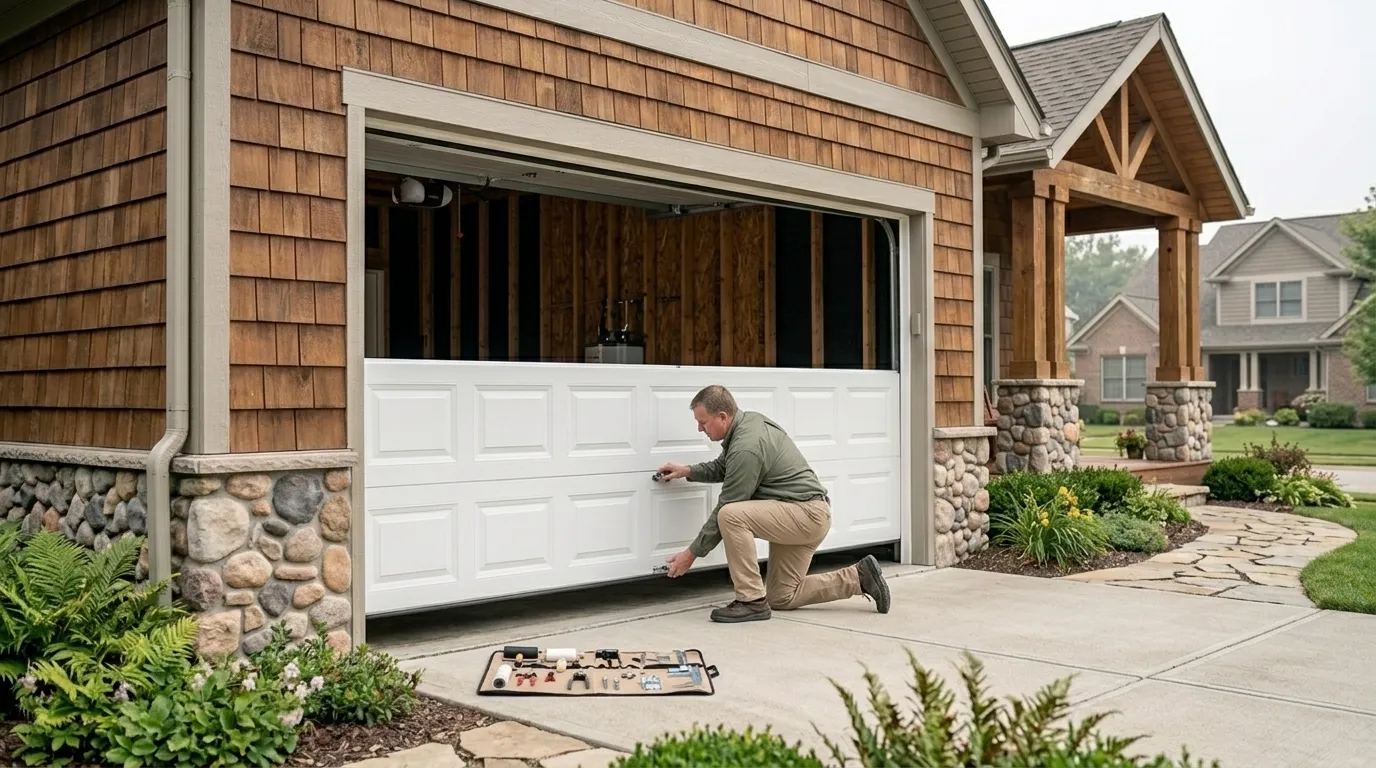
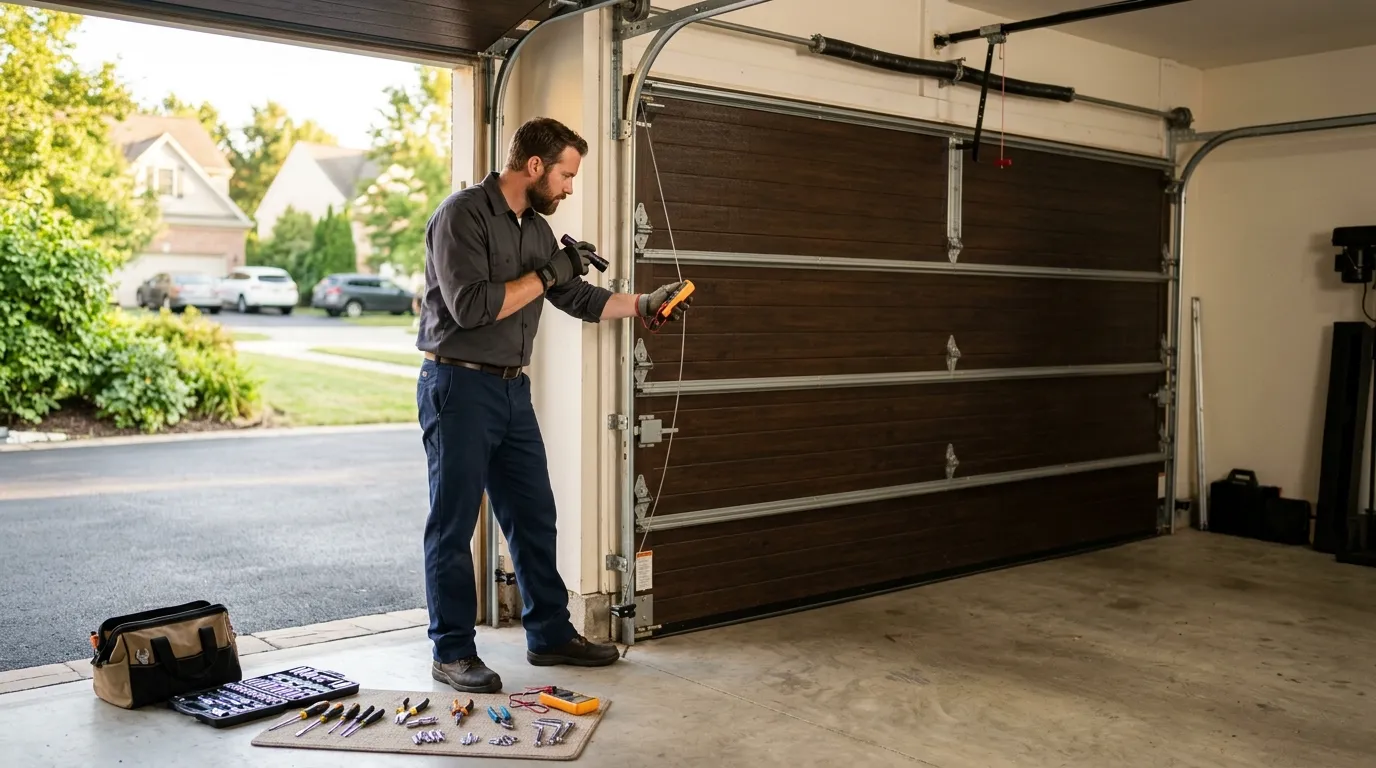
First we get the door off the opener and secure it manually so nothing moves while we're working - on a door this size, that's not optional. Then we check every roller and bracket along both tracks, not just the side that's visibly off, because a heavy steel door that jumps one track often stresses the other side too.
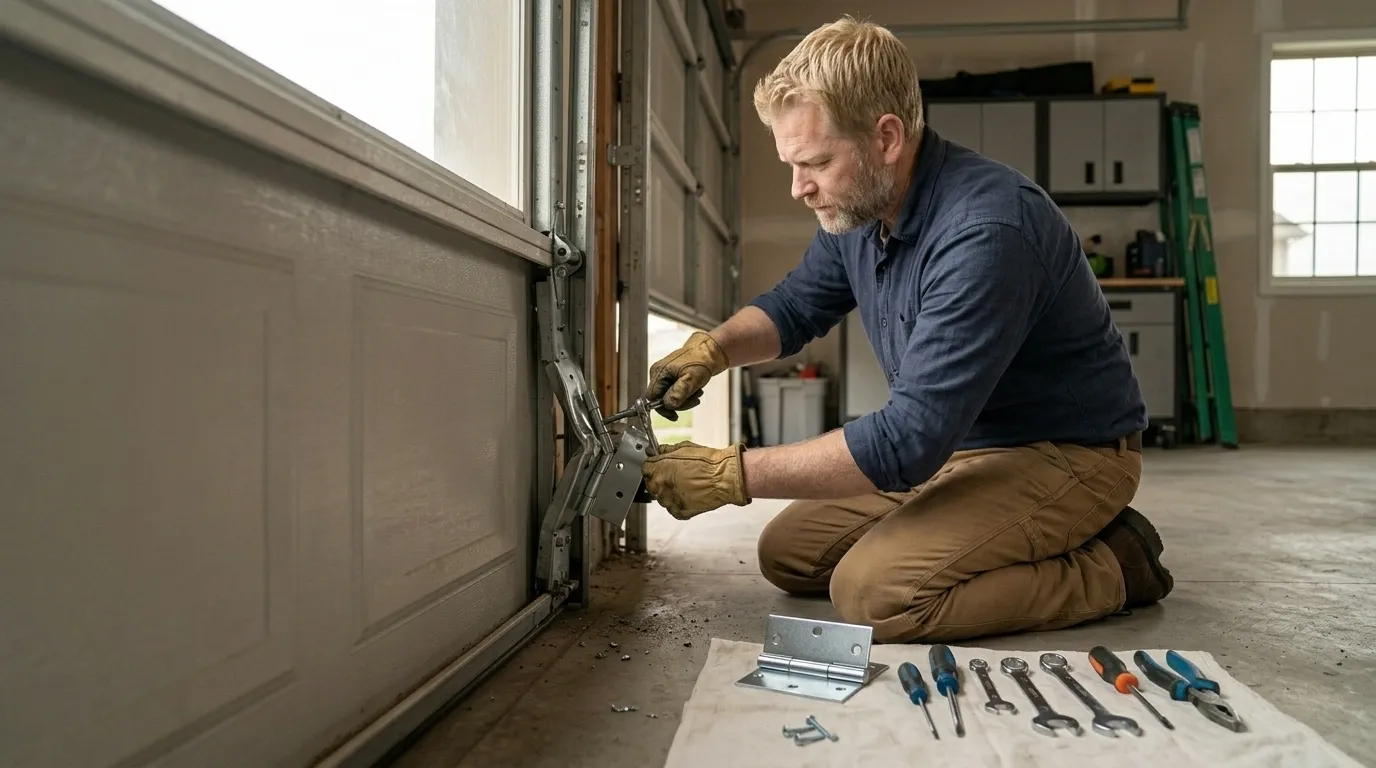
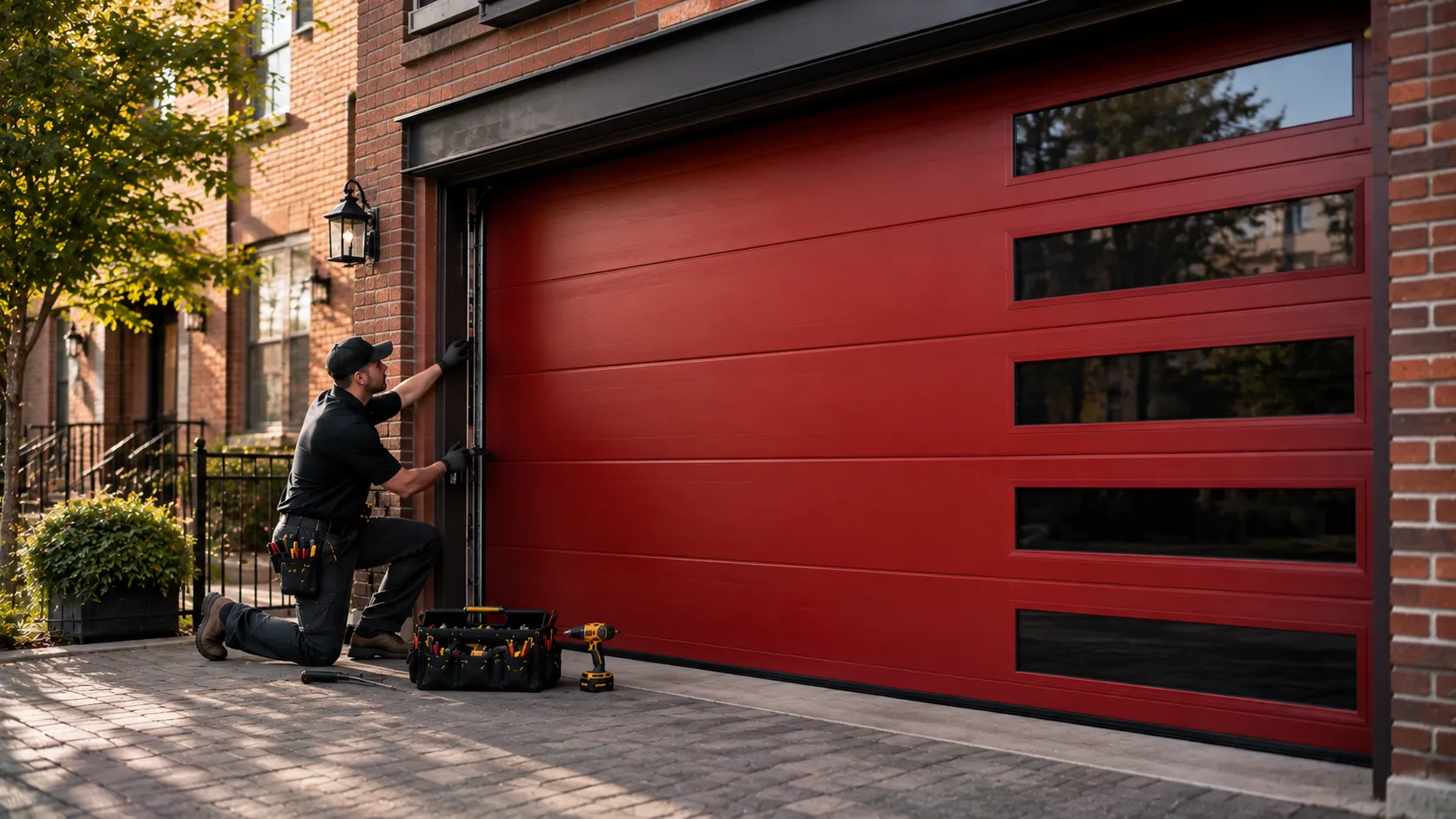
If it's a roller, we pull it, check the track for dents or gouges where it rode wrong, and reset the panel square before locking the roller back into a track section that's actually straight. If a cable snapped, we replace the cable and inspect the drum and the opposite cable too - one snapped cable on a heavy door usually means the other one isn't far behind.
Last step, always: run the door through a full cycle by hand and then on the opener, watching both tracks the whole way. A door this size and weight either tracks true on both sides or it doesn't, and we don't leave a job until it does.